The My 3 Minutes PhD Thesis initiative is part of the activities promoted by UNITA – Universitas Montium together with the Doctoral School.
The idea is simple but quite challenging: PhD candidates have to explain their research in just three minutes, in a way that is clear and understandable even for people who are not experts in the field. In other words, it’s about turning very complex research into something almost anyone can follow. The 2026 edition includes two steps: a local selection and then an international final, which will take place at the University of Brescia.
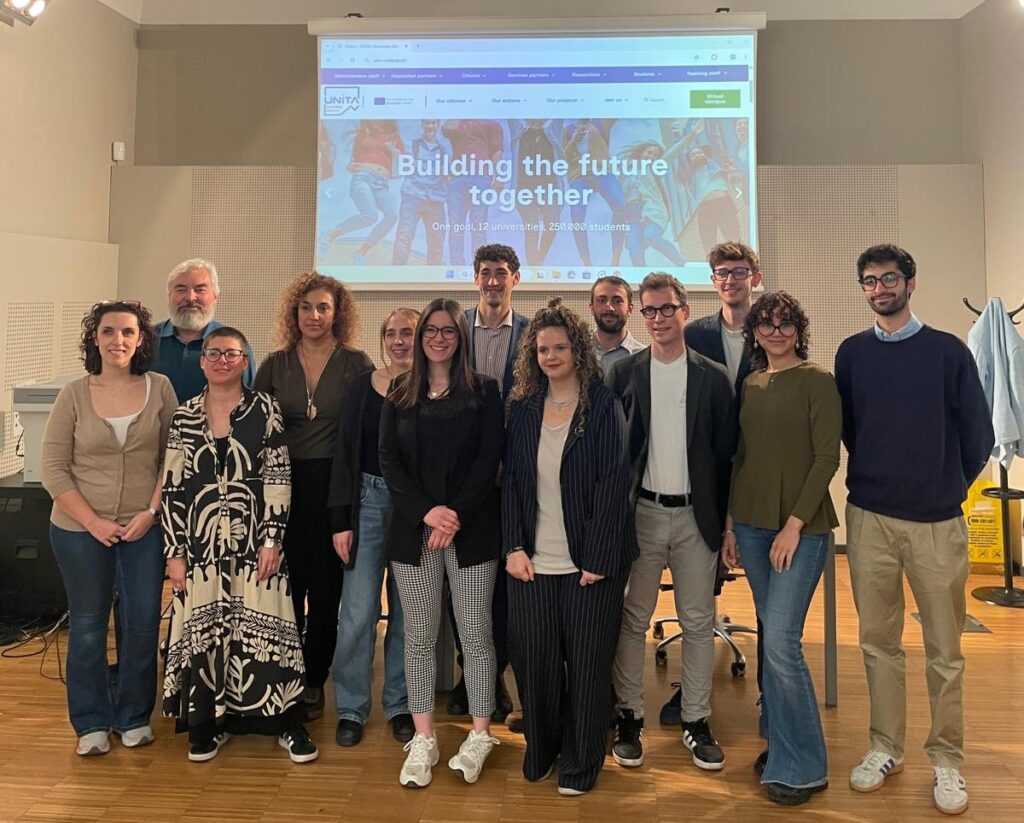
As student members of the UNITA Student Assembly, we had the opportunity to take part in the judging panel during the local selection organised in Turin, together with faculty members and technical-administrative staff. In total, we evaluated seven presentations, each very different in terms of topics, communication styles, and approaches to scientific storytelling.
What impressed us most was the difficulty of the task itself. Explaining years of research in only three minutes means making very careful choices: what to include, what to simplify, and how to keep the audience engaged without losing the core meaning of the work. Some participants used rhetorical questions, others involved the audience directly, while some preferred a more formal and structured presentation style. This diversity made the session dynamic and particularly interesting.
Combination of perspectives
From a student perspective, it was also fascinating to realise how difficult it is to “keep things simple” when dealing with highly specialised topics. During the evaluation process, students naturally focused more on clarity, accessibility, and engagement, while other members of the committee paid closer attention to scientific depth and methodology. This combination of perspectives contributed to a balanced and constructive discussion.
At the end of the selection, Luca Elettrico, from the PhD programme in Biological Sciences and Applied Biotechnology, and Teodora Lattanzi, from the PhD programme in Psychological, Anthropological and Educational Sciences, were selected to represent the University of Turin at the international final competition, which will take place at the University of Brescia from 29 June to 3 July 2026.
Overall, the experience highlighted how valuable initiatives like this can be in making research more accessible, engaging, and connected to society beyond academia.
Fatima Mangouchi, Tommaso Piras