From 6 to 10 July 2026, the University of Turin hosted 25 academic and technical-administrative staff participating in the Blended Intensive Programme (BIP) “Italian Language for Staff and Teachers”, an initiative promoted within the framework of the UNITA Alliance and organised in collaboration with the University Language Centre (CLA-UniTo).
The programme forms part of the activities carried out by the UNITA working group dedicated to multilingualism and intercomprehension. It is one of the instruments through which the Alliance encourages academic and technical-administrative staff to become more familiar with the five Romance languages shared by its partner universities.
Designed for participants with a beginner level of Italian (A1–A2), the BIP adopted a teaching methodology that builds on their prior knowledge of other Romance languages, using intercomprehension as a means of facilitating the learning of Italian. Through a blended pathway comprising a preparatory online component and an intensive face-to-face week in Turin, participants developed language skills for everyday communication, the understanding of simple texts and interaction in international university settings.
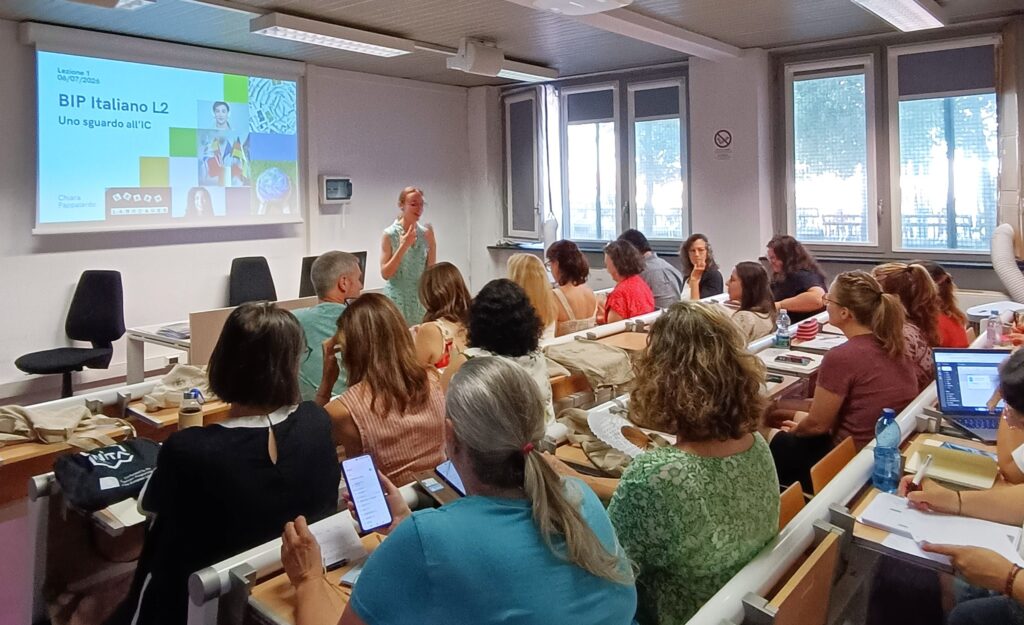
The activities combined language lessons, opportunities for discussion and sessions exploring the role of Italian within the Romance language family. This provided participants with an immersive experience that brought together language learning and reflection on the value of European multilingualism.
The programme also included social and cultural activities aimed at discovering the local area, which were considered an integral part of the learning experience. In particular, participants had the opportunity to explore Turin’s historic centre during a guided tour organised by students from ESN Torino – Erasmus Student Network. The students accompanied the group around the city while also creating opportunities for intercultural exchange.
Through initiatives such as this BIP, UNITA reaffirms its commitment to promoting multilingualism not only as a language skill, but also as a tool for inclusion, collaboration and the development of an increasingly integrated European academic community. Encouraging mutual knowledge of the Romance languages helps facilitate cooperation among the Alliance’s universities and strengthens the sense of belonging to a shared area of education, research and innovation.