CALL FOR ABSTRACTS – OPEN

European University Alliances: Collaborative KnowledgeCreation and Innovation Across Borders20International Forum on Knowledge Asset Dynamics Special Track n.: 36 We are happy to announce the Call for Abstracts for IFKAD 2025. Deadline tosubmit your proposal is 31 January 2025. For any further information, please do not hesitate tocontact us .(https://www.ifkad.org/wp-content/ uploads/docs/track-flyers/2025/Flyer-IFKAD-TR-36-2025.pdf) (https://www.ifkad.org/contact/) For further information For any information related to the event, please see the event website at www.ifkad.org or(http://www.ifkad.org) contact the conference manager at info@ifkad.org (mailto:info@ifkad.org)
The Sacred in the Mountains. The UNITA Conference on Sacred Sites in the Mountain Regions of Turin, Zaragoza, and Chambéry

On May 28–29, 2025, the Città Studi Biella campus hosted a two-day international conference exploring the relationship between communities and sacred sites in the mountain regions of Europe. The event, part of a project funded through the UNITA Starting Grants for Research, focused on the territories surrounding the universities of Turin, Zaragoza, and Chambéry, and also included a comparative case study from New Zealand. The conference was jointly promoted by the Università di Torino, Universidad de Zaragoza, and Université Savoie Mont-Blanc—partners in the UNITA alliance—in collaboration with the International Association for Research on Sanctuaries. The aim was to examine the preservation and sustainable valorization of sacred sites in European mountain areas. Students from the master’s degree course in Cultural Heritage and Creativity for Tourism and Territorial Development at Città Studi Biella actively contributed to the event. Prof. Paolo Cozzo, Director of the Department of Historical Studies at the Università di Torino, explained that the conference aimed to “foster various exchange and research activities among UNITA partners, such as Turin, Zaragoza, and Chambéry, which all share a unique connection with mountainous environments as a common element.” The event was part of a broader research initiative on mountains and territorial development, supported by the UNITA Starting Grants. Students presented the outcomes of one of their academic projects and introduced the features of their degree program to the international participants. Professors from the three universities gave lectures on a wide range of topics: systems for cataloguing and preserving cultural heritage, crimes against ecclesiastical heritage and related security systems, strategies for tourism development of sacred sites in mountainous areas, and even the historical memory linked to football teams. The conference also expanded its scope beyond Europe, featuring a case study from New Zealand, which highlighted a different, yet equally rich and deeply rooted relationship with sacred mountains in Oceania. One full day was dedicated to sacred sites in the Biella area—specifically Oropa, Graglia, and San Giovanni d’Andorno—and later extended to the broader network of Sacred Mounts across Piedmont and Lombardy. French and Spanish experiences were presented as comparative examples. The event concluded with a visit to the Oropa Sanctuary and its Sacred Mount.
UNITA Blended Intensive Program: “Managing Vital Emergencies” course in Switzerland

From June 16 to 20, 2025, HEdS La Source hosted the intensive week of the Managing Vital Emergencies module, part of a second-year Bachelor program in Nursing. As a Blended Intensive Program (BIP), it combined online sessions with in-person training focused on managing cardiac, respiratory, neurological, and obstetric emergencies. The module was developed with five partner institutions from Switzerland, Italy, Finland, and Romania. Students participated in workshops, simulations, and team-based exercises to strengthen both clinical and collaborative skills. Module international sur les urgences vitales à la HEdS La Source Du 16 au 20 juin 2025, l’Institut et Haute École de la Santé La Source (HEdS La Source), membre de la HES-SO, a accueilli la semaine intensive du module Managing Vital Emergencies. Ce module à option, proposé en 2e année du Bachelor en soins infirmiers, fait partie d’un BIP (Blended Intensive Program) combinant des sessions en ligne au printemps et une phase en présentiel sur toute une semaine. Collaboration européenne autour des soins aigus Le module a été développé en partenariat avec quatre institutions de Suisse et d’Europe ayant un programme Bachelor en Soins infirmiers : Chaque université a mobilisé une personne enseignante et un groupe d’étudiant·es (entre 4 et 7 étudiant-es par université), soit un total de 26 participant·es. Financé par la HES-SO et le réseau UNITA, ce projet s’inscrit dans une volonté d’ouverture internationale. Simuler l’urgence, apprendre en équipe L’objectif du module était de travailler la gestion des situations d’urgences (cardiaques, neurologiques, respiratoires, obstétriques). Parmi les contenus travaillés : Durant toute la semaine, les étudiant-es ont pu participer à des séminaires, des ateliers pratiques, des simulations cliniques, la gestion de la réanimation, l’interprétation de gaz du sang, et travailler en équipe interprofessionnelle. La collaboration avec HESAV a permis d’inclure des simulations spécifiques aux urgences obstétricales. Durant cette semaine à Lausanne, les participant·es ont aussi échangé sur les différences de pratiques entre pays. L’évaluation s’est conclue par une présentation orale des étudiant·es. Cette semaine intensive a été une belle opportunité de croiser les regards, les méthodes et les pratiques entre étudiant-es et enseignant-es issu·es de plusieurs pays. Le module Managing Vital Emergencies a non seulement renforcé les compétences cliniques des participant-es, mais aussi favorisé des échanges enrichissants et une réelle collaboration interuniversitaire.
CALL FOR PAPER at FUCAPE Business school Brasil – UNITA Geminae partner
It is now open the CALL FOR PAPERS Reimagining Corporate Social Responsibility: OrganizationalPurpose and Human -AI Synergy. The International conference will be held in Victoria, Brazil next September 3-6, 2025 at theFUCAPE Business school, a Geminae partner. This call it’s open to scholars and practitioners coming from the UNITA alliance and GeminaePartners. If you’re looking to contribute original research that illuminates the evolving nature of CSR in thecontemporary business landscape this is your chance! The focus is on both empirical and conceptual papers and innovative methodologies that push theboundaries of CSR researc especially in human purpose, technological innovation and ethics. The aim is to understand how integrating artificial intelligence and machine learning transformsbusiness operations and redefines the essence of corporate responsibility. How can organizationsleverage these powerful tools to enhance their CSR initiatives while maintaining a human-centricapproach? Remember there won’t be UNITA funds, you must use your research funds for the travel to theconference. More info on submissions and topics: https://srrnet2025.ubi.pt/wp-content/uploads/2024/09/Call-for-papers.pdf Deadline: All papers and abstracts should be sent by June 15, 2025 For any request please write to srrnet2025@ubi.pt (https://srrnet2025.ubi.pt/wp-content/uploads/2024/09/Call-for-papers.pdf) (https://srrnet2025.ubi.pt/home-2/? fbclid=IwZXh0bgNhZW0CMTAAAR1jlgRTyXuf9UzEyyYwKSVXVMfggOSDN4KAZ-pbdi96vnLxKlWVLnY5210_ aem_tEQ1NbqckPx-miSA4qt2Bw) (mailto:srrnet2025@ubi.pt)
UNITA Code of Ethics and Conduct: a step toward creating a safe, fair, and inclusive academic environment

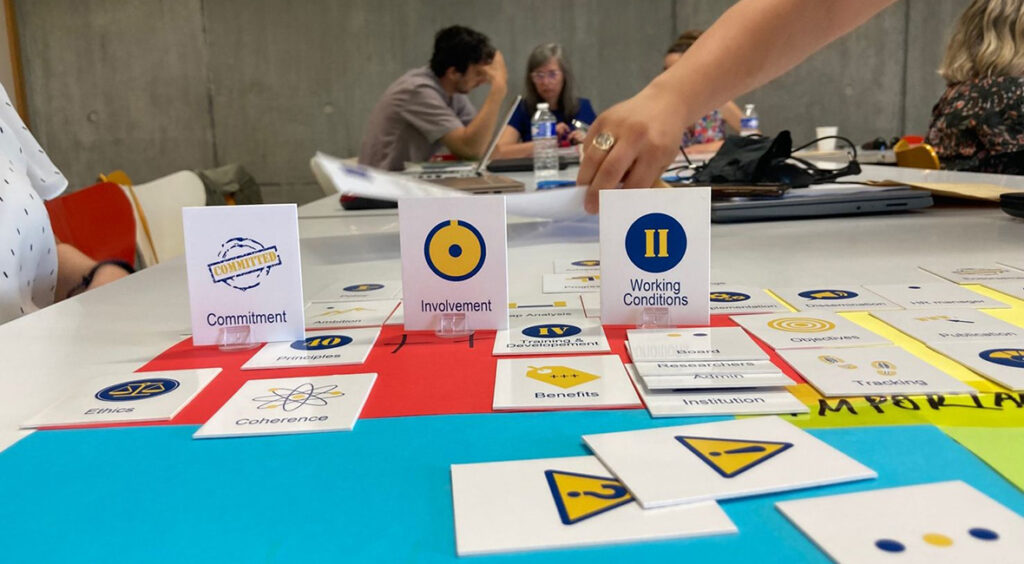
UNITA is proud to launch its Code of Ethics and Conduct, a thorough framework designed to define and encourage ethical behavior throughout the alliance’s activities. Crafted in partnership with experts, member universities, and dedicated task teams, this Code represents a significant step forward in reinforcing the core values that unite the UNITA community: integrity, commitment, professionalism, diversity and inclusion, and sustainability. This Code is more than just a symbolic gesture; it serves as a practical guide for the everyday decisions and actions of students, academic staff, and administrative personnel involved in UNITA’s collaborative projects. It lays out clear expectations for respectful communication, responsible resource management, inclusive practices, and environmentally friendly choices. For example, it advocates for transparency in decision-making, fairness in workload distribution, and support for underrepresented groups. Additionally, it encourages low-impact mobility, aligning with the alliance’s environmental goals. Laura Corazza, expert in Sustainability accounting and one of the Code’s co-authors, shares: “This document reflects who we are as an alliance and serves as a guide for our future direction. It empowers us to act ethically, consistently, and collectively, even amidst diverse institutional cultures.” Maurizio De Tullio, Executive Coordinator of the UNITA alliance and one of the Code’s co-authors, shares : “The Code is the product of a collective intelligence effort of all the partners, who with their insights and feedbacks collected through several iterations, contributed to elevate the quality of the document“ To ensure that the Code is not just a document but a living practice, UNITA will set up a dedicated Ethical Committee. This committee is made up of a diverse group of representatives, including a student, faculty, staff, and ethics and quality assurance experts. They play a crucial advisory role, provide training sessions, monitor ethical compliance, and address any concerns or complaints. A secure whistleblowing platform will also be implemented, guaranteeing complete confidentiality and protection for anyone who reports misconduct. For the UNITA community, the launch of this Code signifies a collective commitment to fostering a safe, fair, and inclusive academic environment one that embodies our values not just in theory, but in action. By weaving ethics into its core, UNITA strengthens its vision of a European university alliance grounded in trust, accountability, and mutual respect. Read the Code in the UNITA website.
UNITA Office Meets with Rector and Vice Rectors of the Universidad de Zaragoza to Strengthen Collaboration

The staff of the UNITA Alliance at the University of Zaragoza met with the Rector and the new Vice Rectors last May. The aim of the meeting was to present the project to the university’s leadership team and to coordinate their collaboration in order to thrive in the international framework. According to the Alliance’s objectives, 25% of students graduating in 2028 should have participated in a UNITA mobility program. La reunión consistió en la presentación del personal de la oficina y de la exposición de los puntos más importantes de UNITA. «Yo he vivido la Alianza UNITA. Os pido como equipo que os involucréis con el alma en este proyecto. Es algo muy enriquecedor para la comunidad universitaria y el proyecto lo merece», expresó la nueva rectora Rosa Bolea, quien anteriormente ya había trabajado en la Alianza. Sergio Salinas, vicerrector de Internacionalización y Cooperación, María Villarroya, directora de la Oficina UNITA, y Kermit Macpherson, director técnico, presentaron también los objetivos del proyecto: «Mejorar la competitividad institucional, fomentar la innovación científica, las energías renovables, el patrimonio cultural, las sociedades inclusivas y promover los valores y la identidad europea».
Green Day 2025 – Book Swap Fair 22 May 2025

On May 22 2025, Task 5.3 UNITA Green Sustainability organized a Book Swap Fair to celebrate the International Day for Biological Diversity. All partner universities personalized the event and involved the entire UNITA community. The initiative was designed by the task group to engage the whole academic communit, students and staff raising awareness on sustainability issues. The book exchange served as an opportunity to introduce the university community to the importance of reducing paper, ink, and other resources used in book production, thereby lowering environmental impact. The event was widely attended, with numerous books exchanged and given a new life, helping to refresh personal libraries and promote the circulation of new knowledge.
Matching event of the Global Health hub at UNIBS

On June 12th and 13th, UNIBS hosted a Matching Event in Global Health, one of the six Hubs of the Alliance. The theme of the Matching Event – Mental and Physical Health, Wellbeing, and Preventive Medicine in Humans and Animals – involved 46 researchers from different universities within the Alliance, representing a wide range of scientific fields. The main goal of this Matching Event was to create professional connections between researchers with scientific interests in related thematic areas and to facilitate the launch of joint projects among partner universities. After registration and institutional greetings by the Vice-Rector for Internationalization, Prof. Roberto Ranzi, and Professors Donatella Placidi and Elisabetta Ceretti, coordinators of the Global Health Hub in Brescia, the researchers delivered their elevator pitches to the audience, providing a valuable opportunity for mutual introduction and a deeper understanding of each others’ research topics. Rector Prof. Castelli introduced the plenary session in which Prof. Silvia Clara Giliani – Rector’s delegate for International Research – and Clémence Roggo – R&D from Hes-so – presented different research opportunities such as UNITA Starting Grants and Horizon Europe programme. In the afternoon and throughout the following day, researchers engaged in one-to-one and group matching sessions aimed at fostering further collaboration among participants. The second day concluded with a meeting to gather final remarks and an optional visit to the medical and engineering laboratories of the University of Brescia. To ensure continuity of the Matching Event, a call for Starting Grants to fund collaborative projects will be published; proposals will have to be aligned with the themes of the event and include researchers from three different universities within the Alliance.
UBI at the 1st BAUHAUS4EU Forum

UBI was invited to participate in the 1st BAUHAUS4EU Forum, in a session on European University Alliances, which took place at the Instituto Politécnico de Castelo Branco (IPCB) between June 11 and 13. Representing UBI, the Pro-Rector for International Cooperation, Célia Nunes, and the Coordinator of the UNITA Office at UBI, Francisco do Adro, presented the UNITA – Universitas Montium Alliance. This Forum brought together around 150 representatives from the 10 European higher education institutions that are part of BAUHAUS4EU, a European Alliance of which IPCB is a partner institution. The event aimed to publicize the potential impact of the project in the regions where the Alliance partners are located.
Visit of Prof. Olivier Naef (HES-SO) to UPPA: three days of shared practices

From June 17 to 19, the University of Pau and the Adour Region (UPPA) hosted Professor Olivier Naef, Dean of the Faculty of Engineering and Architecture at HES-SO, for a scientific visit focused on sharing best practices and fostering academic cooperation. Du 17 au 19 juin, l’Université de Pau et des Pays de l’Adour a accueilli le Professeur Olivier Naef, doyen de la Faculté d’ingénierie et d’architecture de la HES-SO (Haute école spécialisée de Suisse occidentale), actuellement en congé scientifique. Cette venue s’inscrivait dans une dynamique de partage de bonnes pratiques et de coopération académique, en lien avec les actions menées dans le cadre de l’alliance UNITA – Universitas Montium. Organisée par le bureau UNITA de l’UPPA, cette visite de trois jours a permis d’aborder de nombreux sujets liés à la formation, à la recherche, à l’internationalisation, aux relations partenariales avec le secteur non-académique et à l’innovation pédagogique. Le programme comprenait : Une présentation du projet GREEN et des actions interdisciplinaires qu’il fédère autour des transitions ; Des échanges sur les doubles diplômes, la codirection de thèses, et les modèles de co-diplômation dans un contexte européen ; Une rencontre avec la direction de la recherche et les services d’appui pour évoquer les financements européens, les mobilités croisées, et les dispositifs d’accompagnement des chercheurs ; Des temps d’observation et de discussion dans plusieurs composantes de l’université, notamment l’ISA BTP, l’IPRA, l’IAE, l’IUT et l’IAE Bayonne ; Des moments conviviaux qui ont permis de nourrir les échanges informels et de créer un véritable lien humain et professionnel. Le professeur Naef a salué l’ouverture, la diversité des approches et la qualité de l’accueil qui lui ont été réservés. Il a particulièrement souligné le potentiel du projet GREEN comme socle de coopérations structurantes entre l’UPPA et la HES-SO. « Les échanges ont été particulièrement riches et inspirants. Ils témoignent de la vitalité de l’UPPA et de sa capacité à construire des réponses innovantes aux enjeux contemporains », a-t-il précisé dans son compte rendu. Un rapport de synthèse de cette visite a été transmis à l’alliance UNITA et sera partagé avec les instances de la HES-SO afin d’envisager les prochaines étapes de cette collaboration. Un grand merci à l’ensemble des collègues impliqués dans cette visite, et à toutes celles et ceux qui font vivre au quotidien l’ouverture européenne et internationale de l’UPPA !