Co founded by the european union logo

Fighting Prejudices through Intercomprehension and Interculturality

Fighting Prejudices through Intercomprehension and Interculturality

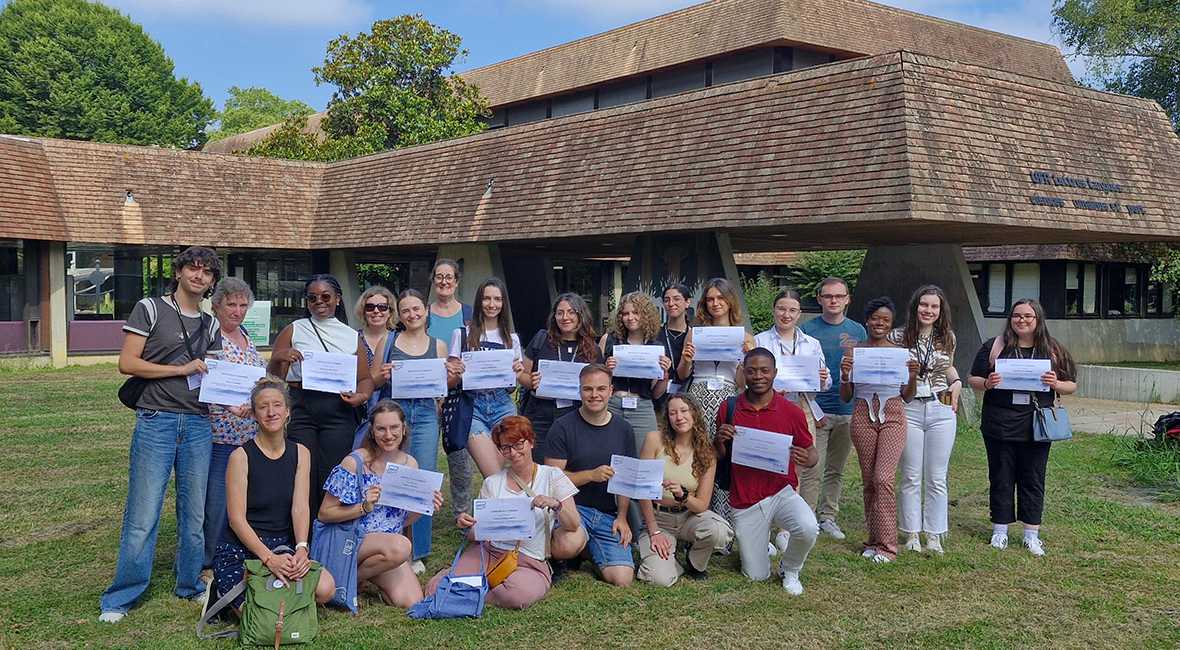
From July 15 to 20, the University of Pau and the Adour Region (UPPA) hosted the Blended Intensive Programme (BIP) “Fighting Prejudices: Intercomprehension and Interculturality” on its Pau campus. This program, which brought together students and teachers from across Europe, aimed to promote intercultural communication and international cooperation.

For a week, participants had the opportunity to develop their intercomprehension skills through workshops combining theory and playful practice, led by teachers from the UNITA alliance. In addition to these workshops, the program included various cultural and collaborative activities, such as a thematic tour of Pau focused on Street Art, allowing students to discover the city from a different perspective. The association Préjugix was also invited to give a one-day workshop to raise students’ awareness of the fight against prejudices, encouraging new perspectives on others and combating discrimination.
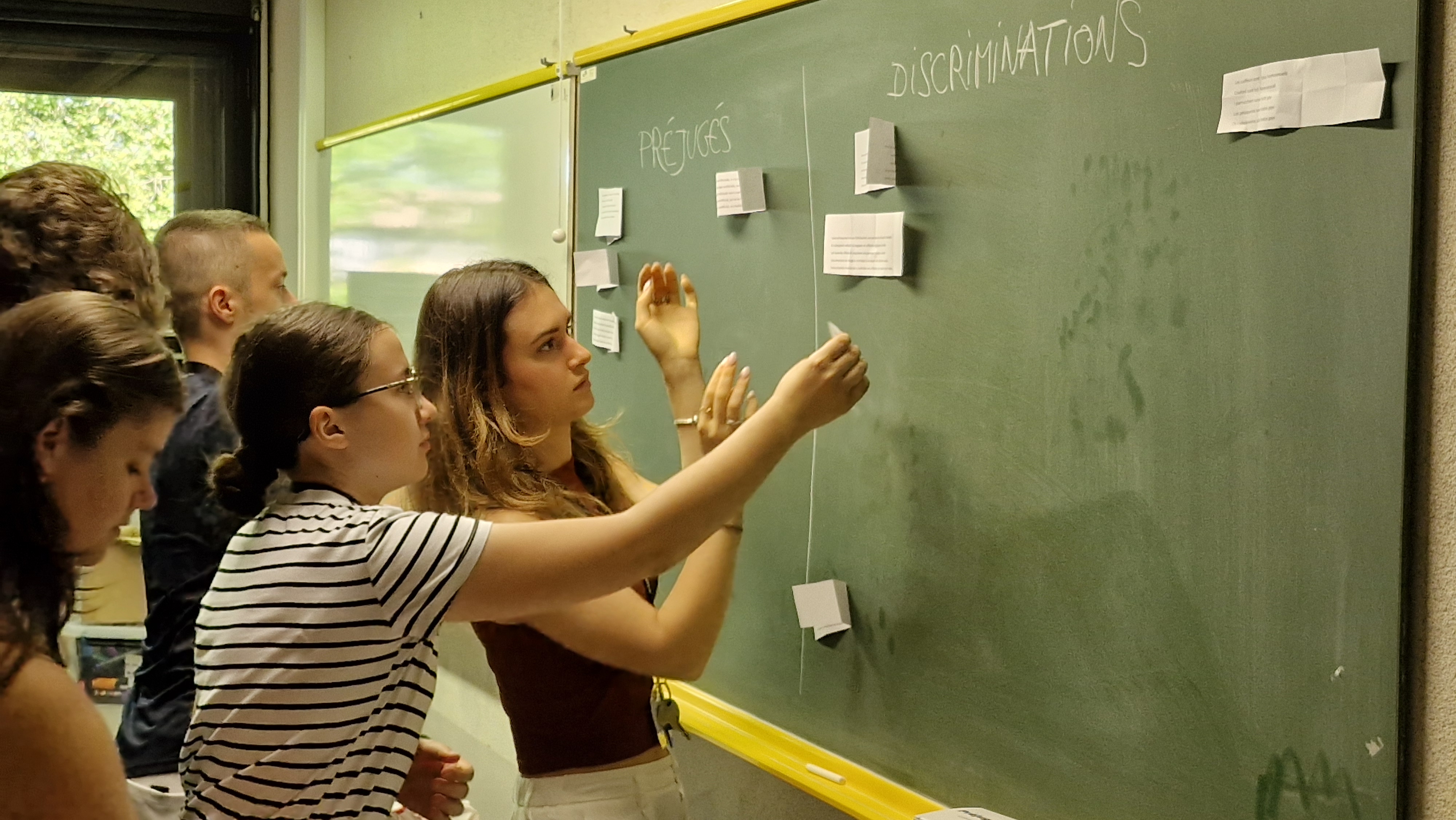
Throughout the five days, participants and speakers communicated using their native Romance languages, leveraging intercomprehension strategies. This mode of communication offers several advantages, particularly by including students who do not have a strong command of English and may not be eligible for traditional mobility programs.
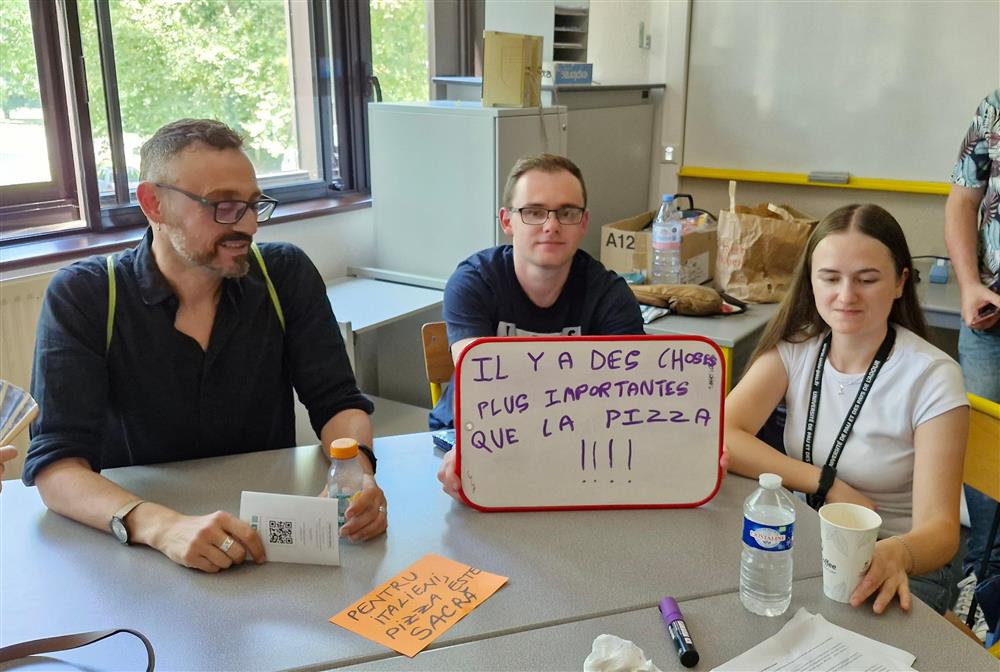
Daniela Nelva, a German professor at the University of Turin, highlighted the importance of this initiative, the result of a collaborative effort between ten professors from four universities, brought to life following a matching event in Turin. She emphasized that the close ties between the University of Turin and UPPA, strengthened by the UNITA alliance, facilitate the emergence of such projects. “Students are encouraged to reach out to others, leading to lasting friendships,” she explained, adding that this format enables short-term mobility, ideal for a first experience and immersion in a multicultural group. “This experience truly helps to build Europe between people,” she concluded.

For Yoleine, a UPPA student pursuing a diploma in Logistics and Transport Management, the BIP was an enriching experience. Having already participated in a BIP in Zaragoza, she saw this format as an opportunity to travel and meet students from across Europe.

Sheila, a third-year law student at the University of Zaragoza, appreciated the theme and intensity of the program. Having previously participated in a BIP in Timișoara, she noted that the short format allows her to balance mobility with a busy schedule.

This BIP once again demonstrates the impact of international collaborations and the role of the UNITA alliance in promoting the values of multilingualism and interculturality. By enabling students from various nationalities to work together and learn about each other, these programs foster personal enrichment for students and professional growth for the associated professors.
Share the Post:

UNITA’s Inclusive societies Hub is one of the six hubs. Each hub is led by a ‘Task Force’, constituted by researchers representing the member universities.

This task force is animated and coordinated by two universities, Prof. Monica SZELES (UNITBV) , Prof. Patricia ALMAGUER (UNIZAR) and  Prof. Concepción LOMBA (UNIZAR) are the contact points.

Discover here below the Matching events organized within the Inclusive societies hub: 

UNITA’s Global health Hub is one of the six hubs. Each hub is led by a ‘Task Force’, constituted by researchers representing the member universities.

This task force is animated and coordinated by two universities, Dr. Amalric ORTLIEB (HES-SO) and Dr. Donatella Placidi (UNIBS) are the contact points.

Visit the Global Health hub padlet

Matching events for Global Health Hub

UNITA’s Digital transitions Hub is one of the six hubs. Each hub is led by a ‘Task Force’, constituted by researchers representing the member universities.

This task force is animated and coordinated by two universities: Prof. Antonio LOPEZ (UPNA) and Prof. Alexandre Miguel Pereira FIGUEIREDO (IPG) are the contact points.

UNITA’s Cultural Heritage Hub is one of the three hubs, together with Circular Economy and Renewable Energies, each one of them corresponding to one of the three Axes in which research activities in UNITA universities have been divided.

Each hub is led by a ‘Task Force’, constituted by researchers representing the member universities.

This task force is animated and coordinated by two universities, Prof. Laurence Roussillon-Constanty (UPPA) and Prof. Giaime Alonge (UNITO) are the contact points.

Within the research cartography, more than 300+ Cultural Heritage projects can be found, grouped into the following themes and sub-themes:

· Study and preservation of tangible Cultural Heritage
· Intangible Cultural Heritage and identity narratives
· Enhancement and dissemination of cultural and natural heritage
· Innovation policies for the development of marginalised areas

UNITA’s Cultural Heritage Hub

UNITA’s Circular economy and environment hub is one of the six hubs, each one of them corresponding to one of the three Axes in which research activities in UNITA universities have been divided.

Each hub is led by a ‘Task Force’, constituted by researchers representing the member universities.

This task force is animated and coordinated by two universities, Prof. Stefania DIMA (UVT) and Prof. José Maria FRAILE (UNIZAR) are the contact points.

Within the research cartography, more than 200+ Circular Economy projects can be found, grouped into the following themes and sub-themes:

 Activities achieved so far:

  • PhD thesis in cotutelle
  • Microcredentials
  • Summer Schools
  • Research seminars and workshops

UNITA’s Green energies Hub is one of the six hubs, each one of them corresponding to one of the six axes in which research activities in UNITA universities have been divided.

Each hub is led by a ‘Task Force’, constituted by researchers representing the member universities.

This task force is animated and coordinated by two universities, Prof. Benoit STUTZ (USMB) and Prof. Antonio CARDOSO (UBI) are the contact points.

Within the research cartography, more than 120+ projects related to renewable energies can be found, grouped into the following themes and sub-themes:

Energy transformation & Integration – System – Energy carriers
Solar energy
Socio-economic & legal & education aspect
Bioenergy
Geothermal energy
Hydropower
Wind

Activities achieved so far:

  • PhD thesis in cotutelle
  • Microcredentials
  • Summer Schools
  • Research seminars and workshops