Mariia Huliaieva and Mariia Chikarkova, Ukrainian researchers reflect on the contrast between daily life in a war-torn country and their brief academic stay in Spain.

Mariia Huliaieva and Mariia Chikarkova, aged 36 and 52, are Ukrainian researchers at the University of CHNU, in the city of Chernivtsi in Western Ukraine. For them, these eleven years of war have radically changed their lives: their country is under constant bombardment, yet they have to continue with their daily lives. However, making long-term plans or thinking about the future with certainty is nearly impossible, as they cannot be sure what will happen tomorrow.
They live in Сhernivtsi, a city of 260.000 inhabitants. Although their town is far from the war front, they hear sirens every day and are exposed to danger. According to their testimonies, many refugees come to their city because it seems safer but it is not at all. They claim that there are no longer safe places in Ukraine anymore: “We hear bombing sirens every day and we have to stop what we are doing, whatever, and find a safe place for us”.
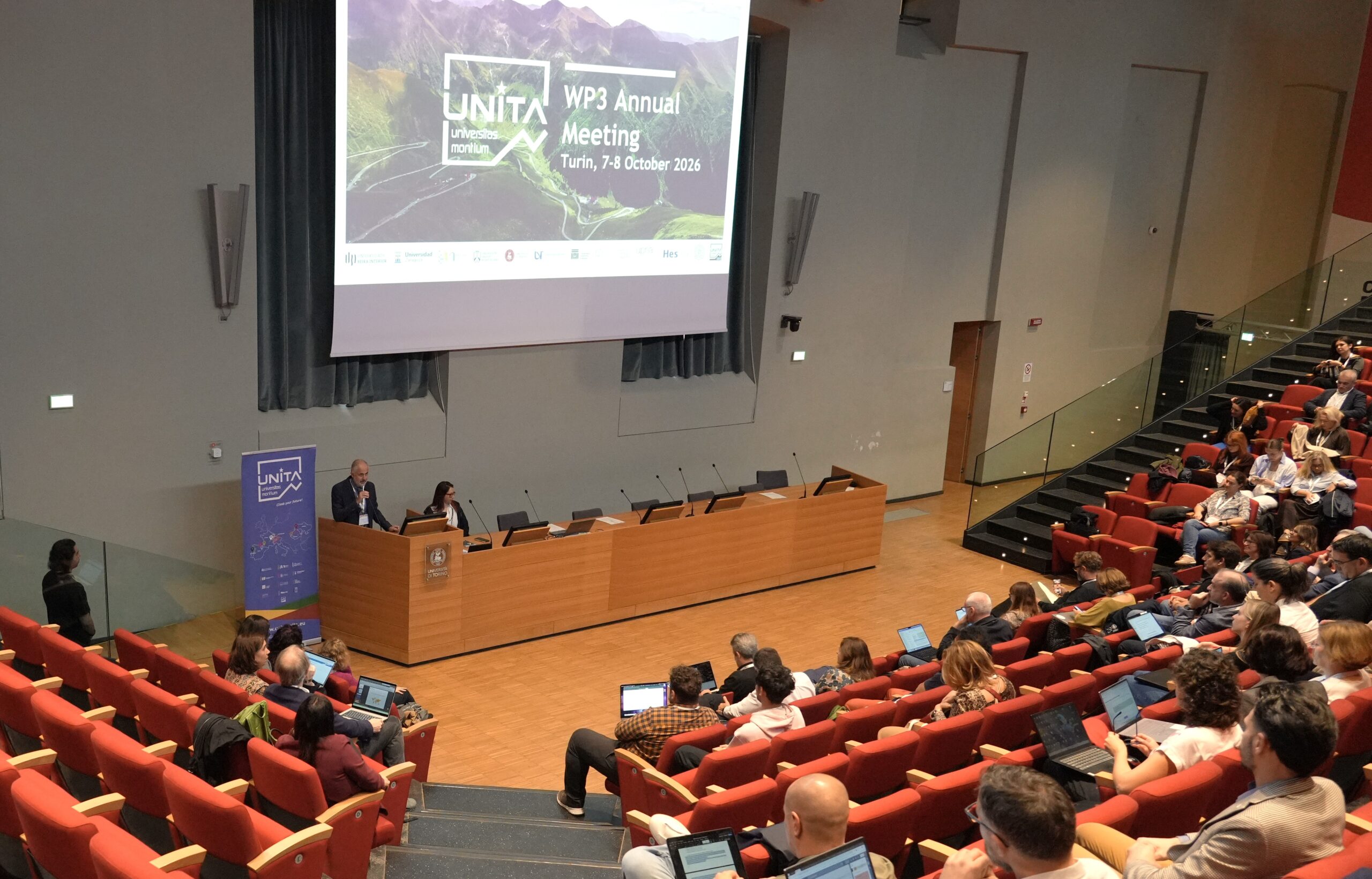
Despite the situation, they are doing their best to maintain their academic work and they came to Zaragoza to participate in the UNITA Matching Event on Social Inclusion and Equal Opportunities, held at the Universidad de Zaragoza on April 1–2: “Coming to Spain for a few days has been a very good experience. On the other hand, we keep reading the news from Ukraine, and it is a terrible feeling”.
You say that your life has totally changed
MC: It’s a very complicated topic for us because of our experiences. Because we live in Ukraine and in these circumstances. So obviously our life has completely changed after this war and it continues. We have completely another reality.
MH: There is a world famous sentence about the war in Ukraine, that there are no safe places anymore in the country. We live in Chernivtsi and we think that it’s almost safe, however, we hear bombing sirens every day and we have to stop what we are doing, the lessons, whatever, and find a safe place for us.
It seems that this war has no end…. Would you like it to stop now?
MC: We understand that Russia wants to have all Ukraine under occupation so we have no choice, just fight. I know of many civilian victims, and I understand that if Russia comes in my region the same situation will happen again. The teachers, professors or assistants we are also targets because we don´t want this. Our aim is to teach about Ukrainian identity, about Ukrainian culture…For example, my friend at Mariupol was killed. She was killed because of her profession. She wasn’t a soldier, just a teacher.
MH: We are dreaming of peace, civilization, not the war.
Have you ever thought of emigrating?
MC: No one wants to leave their country, obviously, because we like our country. Families with small kids are leaving the country to find safer places. Explaining war to young children is hard, and no parent wants their son or daughter to grow up in bomb shelters and basements.
MH: In my area, my friends and my neighbors, who have already left, were not looking for a better life, but for a safer life. They didn’t want to move because they want to have more money, change their jobs, vehicles… No, they had a perfect job, very nice houses, flats, enough money and they were happy in Ukraine. But they moved just for life and for safe places for their children. And I know that these people dream about returning to Ukraine, but they want to be alive. And being alive and having life for their children, not under bombarding.
You work at the university. How is the war affecting young people?
MH: The younger generation is not as naive as I was when I was a child or student. I didn’t believe that something like that could happen in Europe in 21st century. This modern young generation is stronger, very pragmatic, clever and they understand everything that is happening now. I think that they can manage many problems, but we have to prepare a lot of psychologists, a lot of social workers, to help them and their families, especially the families where there were soldiers. At our department of Pedagogy, Psychology and Social work we are preparing psychologists, pedagogues and social workers to help them.
MC: Yes, and because of this situation I think they became adults in one moment, and they rethink their values. Before the war it was something like the aim of their life is having a new model of smartphone, but nowadays most of us, including students, think happiness is to be alive. I’m a happy person because I woke up in my own apartment, so I’m happy. I’m alive. I’m at home. OK. Thanks God.
How you feel these days in Spain?
MC: It’s a very nice place, very kind people. It is being a very good experience. On the other hand, we are still reading the news from Ukraine and it’s terrible feeling so we can’t completely get away from our brains. Also it is so strange that people in Spain, for example, can live in their usual lifestyle. It’s so strange for us that people can drink in the streets, walking at the midnight and they look so happy.
MH: In Ukraine we have a curfew in the night after 00:00 till 5:00 or 6:00 in the morning. You were asking us at the beginning of our interview about if our lives have changed because of the war. Yes, it has changed because actually, even in the night we have this curfew and we can´t go out.