


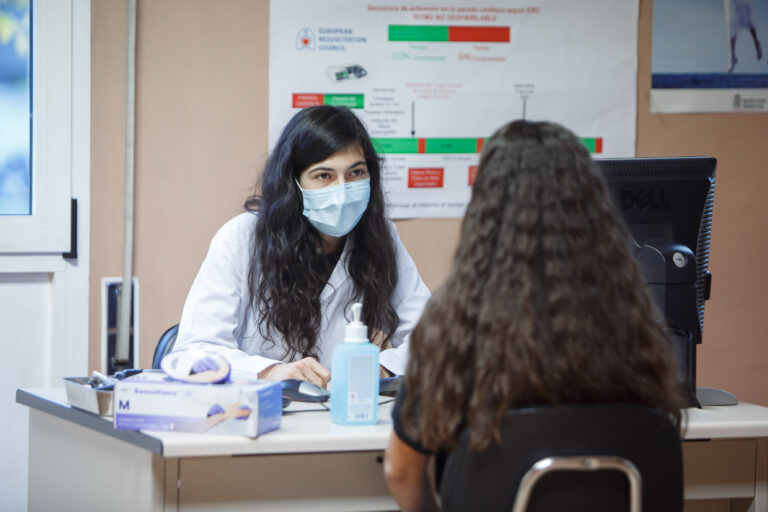
The West University of Timișoara will host a WP4 workshop with stakeholders in December 2026, focused on inclusive, respectful and rights-based approaches to gynaecological healthcare.
The workshop will bring together researchers, healthcare professionals, civil society organisations, patient associations and other relevant stakeholders to discuss how to strengthen the relationship between patients and care providers, improve mutual understanding and address practices that may undermine trust, autonomy and dignity in gynaecological and obstetric care.
The event will provide a space for dialogue across disciplines and sectors, with particular attention to the experiences of women and gender-diverse people in healthcare settings.
The workshop is linked to the project W(h)OCAREs? A Recipe for a Holistic Approach to Women’s Health: Strengthening the Therapeutic Alliance in Gynecological Care, which addresses gynaecological and obstetric violence as a systemic barrier to
Short description of the project
W(h)OCAREs addresses gynaecological and obstetric violence (GOV) as a barrier to equitable healthcare for women and gender-diverse people. Going beyond maternity care, it covers all gynaecological services, develops a legal definition of GOV, and explores ways to strengthen the patient–provider relationship.
Using an interdisciplinary, bottom-up approach, the project brings together researchers, civil society, and healthcare professionals. It combines literature review and guideline analysis with surveys and interviews, applying an intersectional lens to understand GOV as a systemic issue affecting trust, autonomy, and dignity in care.
Aligned with UNITA’s mission, W(h)OCAREs fosters transnational collaboration and supports future EU research in inclusive gynaecological healthcare.
Aims and Objectives
W(h)OCAREs pursues two main aims: strengthening the therapeutic alliance through better mutual understanding between patients and healthcare professionals, and enhancing the protection of gynaecological health by empowering survivors of gynaecological and obstetric violence (GOV).
Results
W(h)OCAREs expects to deliver:
• A robust research foundation on GOV, including a legal definition for use in future studies, advocacy, and policy, to be published in an open-access indexed journal
• Open publication of research data on a trusted repository
• A comprehensive map of patient associations addressing GOV and potential partners for future project proposals
These results will underpin a proposal for national or European funding to scale up research, develop interventions, and drive policy reforms in gynaecological care.
Principal investigator: Barbara Gagliardi, Università di Torino
Team leader 1: Roxana Andreea Toma, Universitatea de Vest din Timisoara
Team leader 2: Giacomo Viggiani; Università degli Studi di Brescia
Team leader 3: Andreea Bogdana Isbasoiu, Universitatea Transilvania din Brasov
Team leader 4: Amélia Maria Cavaca Augusto, Universidade da Beira Interior
1. University of Turin – Leader
Founded in 1404, the University of Turin is one of Italy’s oldest and known universities. Located at a historical crossroads between the Alps, Liguria, and Lombardy, it has grown into one of the country’s largest institutions, with around 83,000 students and courses across all academic disciplines except Engineering and Architecture. The University is strongly committed to international research, innovation, and social engagement. The team involved in this project is based in the Department of Law.
Team
Team leader: Barbara Gagliardi, Professor of Administrative Law
Team members:
- Manuela Consito, Professor of Administrative Law
- Tullia Penna, Researcher in Philosophy of Law
- Georgia Zara, Associate Professor of Criminal Psychology.
Associations involved
Associazione Vitadidonna ODV
Vitadidonna ODV is a non-profit organisation based in Italy that provides free counselling, telephone and email support, and medical consultations on all aspects of women’s health and sexuality.
Cooperativa Sociale Progetto Tenda
Progetto Tenda is a social cooperative that provides protection, shelter, for people in vulnerable situations. It assists women who have suffered gender-based violence, including in healthcare and reproductive contexts.
Comitato Vulvodinia e Neuropatia del Pudendo
The Comitato Vulvodinia e Neuropatia del Pudendo is a patients’ advocacy organisation that brings together women living with vulvodynia and pudendal neuralgia, alongside a scientific committee of healthcare professionals dedicated to research and treatment of these conditions.
AIDOS – Associazione Italiana Donne per lo Sviluppo
AIDOS is an Italian non-governmental organisation that works to promote and defend the rights, dignity, and freedom of choice of women and girls worldwide, focusing on sexual and reproductive health and rights.
2. West University of Timișoara
The West University of Timișoara (UVT) is a leading Romanian public university founded in 1944, with over 15,000 students across 11 faculties. Committed to quality education, research, and interdisciplinary innovation, UVT is an active member of the UNITA European University Alliance. It promotes inclusive, student-centred learning and engages with local and international communities through research and partnerships, contributing to regional development and European higher education.
Team
Team lider: Toma Roxana Andreea, Associate prof.
Team members:
- PhD. Erdelean Dragoș, Assistant prof. MD
- Phd. Candidate Bărăgan Beatrice
Associations
AIC The Cancer Association
The Cancer Association was founded in 2009 with the mission of improving the quality of life for people affected by cancer. Operating across western Romania, it delivers comprehensive support programmes for oncology patients and their families, offering emotional support, complementary therapies, art therapy, psychological counselling, and educational and awareness programmes.
3. Transilvania University of Brașov
Transilvania University of Brașov (UNITBV) is the largest university in the center of the country and it is a comprehensive university offering programs in 43 fields of science. UNITBV’s mission consists of producing and transferring knowledge to society through initial training at the university level, embodied in bachelor’s, master’s and doctoral degree programs, through advanced scientific research, development, innovation and technological transfer. UNITBV’s mission also aims at training through postgraduate programs and developing the interaction between the University and society, through partnerships in accordance with the principles of a knowledge-based society.
Team leader: PhD. Andreea Bogdana Isbasoiu, Assistant Professor
4. Geneva School of Health Sciences
The Geneva School of Health Sciences (Haute école de santé de Genève, HEdS-GE) is part of the HES-SO University of Applied Sciences and Arts Western Switzerland. It provides higher education and applied research in health disciplines, including midwifery, nursing, physiotherapy, nutrition and dietetics, and medical radiology. The institution promotes interprofessional education and practice, with a strong focus on public health, evidence-based care, and patient-centered approaches. Research activities in midwifery are supported by the GENMIR laboratory (GENeva MIdwifery Research unit), which develops projects in perinatal health, quality of care, and women’s experiences.
Team leader: Laurent Gaucher, PhD, Professor of Midwifery, Geneva School of Health Sciences
Head of Midwifery Department: Silvia Ammann-Fiechter, MSc
Team members (teaching and research team):
- Silvia Ammann-Fiechter, MSc
- Laura Chavaz, MSc
- Aurélie Delouane-Abinal, MSc
- Thomas Desplanches, PhD
- Jessica Di Vincenzo-Sormani, PhD
- Hadame Diop, MSc
- Maud Elmaleh Morand, MSc
- Tiphaine Folger, MSc
- Laurent Gaucher, PhD
- Arabelle Gautier, MSc
- Azucena González Gómez, MSc
- Laura Guillou, MSc
- Marie-Julia Guittier, PhD
- Clémence Haydar, MSc
- Elsa Lorthe, PhD
- Corine-Yara Montandon, MSc
- Catia Nunno Paillard, MSc
- Ornella Rouveirolles, MSc
- Françoise Roy Malis, MSc
- Sarah Soussan, MSc
GENMIR laboratory members
- Laurent Gaucher, PhD
- Thomas Desplanches, PhD
- Jessica Sormani, PhD
- Elsa Lorthe, PhD
- Emilienne Celetta, PhD candidate
- Mathilde Héritier, PhD candidate
- Gilles Catani, PhD, Biostatistician
Associated organizations:
RESHAPE (RESearch on HealthcAre PErformance), Inserm U1290 (France).
5. University of Brescia
The University of Brescia is a public university established in 1982, characterized by a strong multidisciplinary orientation and close ties to the regional socio-economic context. Its academic structure includes programs in law, economics, engineering, and medicine, with a growing emphasis on research, innovation, and internationalization. The Department of Law, University of Brescia (DIGI) is the university’s hub for legal studies. It offers a five-year single-cycle Master’s degree in Law, as well as postgraduate and professional training programs. The Department promotes a solid grounding in legal theory combined with practical and interdisciplinary approaches, supporting research across various fields of law, including private law, public law, and emerging areas related to rights, markets, and technological developments.
Team
Team leader: Prof.ssa Simona Cacace, Associate Professor in Private Law
Team member: Prof. Giacomo Viggiani, Associate Professor in Philosophy of Law