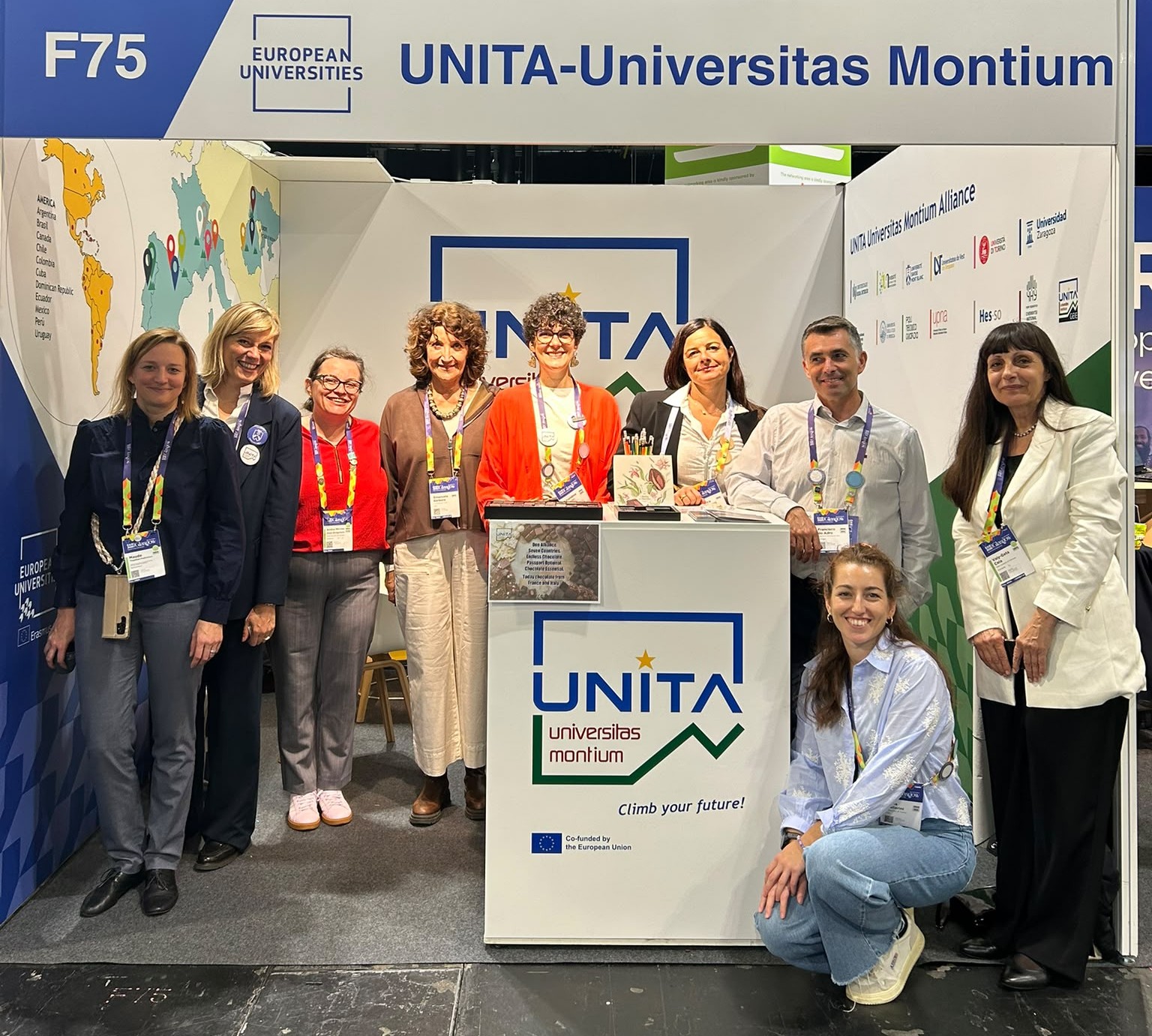
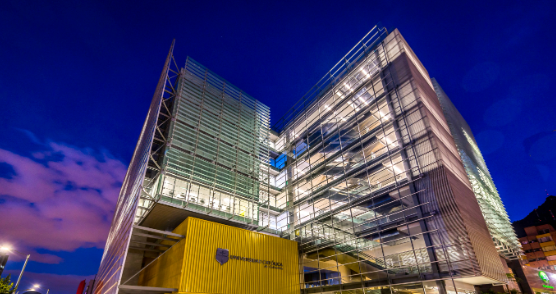
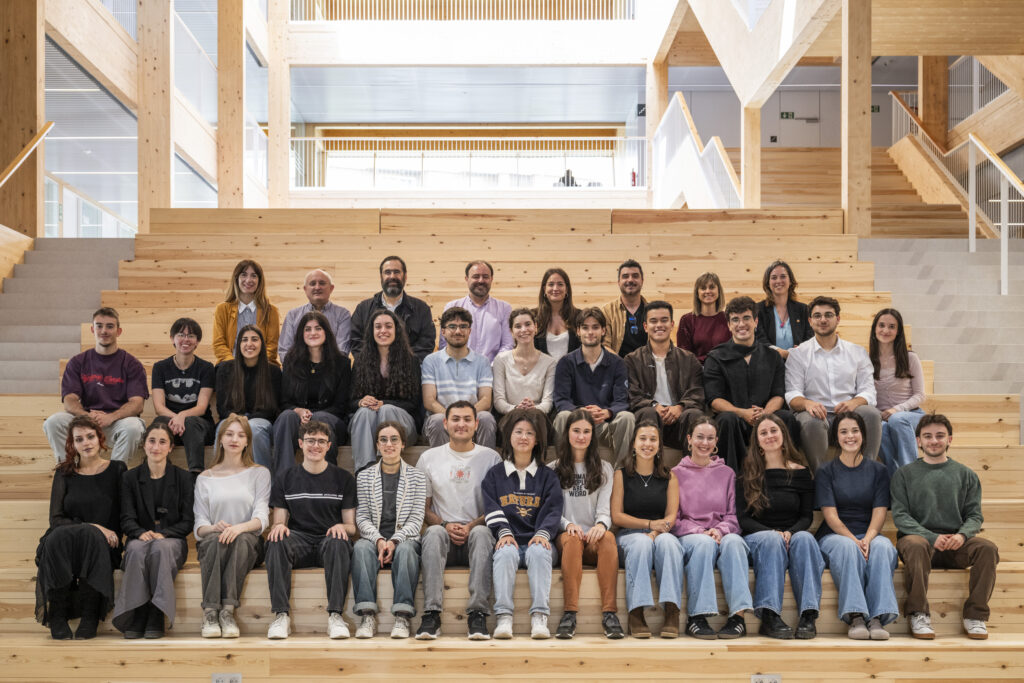
The Public University of Navarre (UPNA) recently hosted the in-person sessions of the 1st UNITA International Online Psychology Student Conference, organised jointly by students from the Spanish university and from Transilvania University of Brașov (UNITBV) in Romania. Over three days, around one hundred Psychology students from the universities belonging to the Alliance took part in the event, whose programme featured more than 25 activities focused on training, research and networking. Its aim was to create a space for exchanging ideas, discussing the latest scientific developments and establishing professional links.
Among the activities on offer, four lectures on key areas of psychology stood out, delivered by researchers and lecturers from different universities within the UNITA alliance. These presentations addressed major topics such as grief, anxiety disorders in children and adolescents, the psychology of leadership and suicidal behaviour.
Academic staff from the two organising universities, UPNA and UNITBV, also delivered three specialised workshops on innovative topics in the field of psychology. These included the emotional processing of adverse experiences and the use of cinema to explore emotions and behaviours.
Collaborative learning
The 1st UNITA International Online Psychology Student Conference was organised using the COIL methodology — Collaborative Online International Learning — and forms part of the UNITA Grants for Innovation in Teaching and Learning 2025 programme, funded by the European Commission.
COIL is based on interaction and collaboration between two countries through the development of a joint activity. This approach connects students and academic staff from different cultures, enabling them to learn, discuss and work together as part of their educational programme. COIL is integrated into the structure of the course and provides students with a meaningful intercultural experience within their study programme.