Against this backdrop, UNITA – Universitas Montium, through its legal entity UNITA GEIE, is convening a high-level European conference on 26 November to explore how European University Alliances can evolve from higher education cooperation initiatives into strategic partners for regional competitiveness, territorial resilience and place-based development in supporting territorial revitalisation. Bringing together representatives of the European Commission, European University Alliances, regional authorities and policy experts, the conference will examine how higher education can contribute to talent retention, innovation, skills development and place-based growth, while strengthening the connection between European priorities and regional ecosystems.
The discussion comes at a particularly timely moment. The ongoing reform of EU Cohesion Policy and the transition towards the proposed National and Regional Partnership Plans are reshaping the governance of European investments, while the European Universities Initiative continues to evolve as one of the Union’s flagship programmes for higher education integration. This creates a unique opportunity to reflect on how University Alliances can become strategic partners not only for education and research, but also for regional development, innovation and territorial resilience.
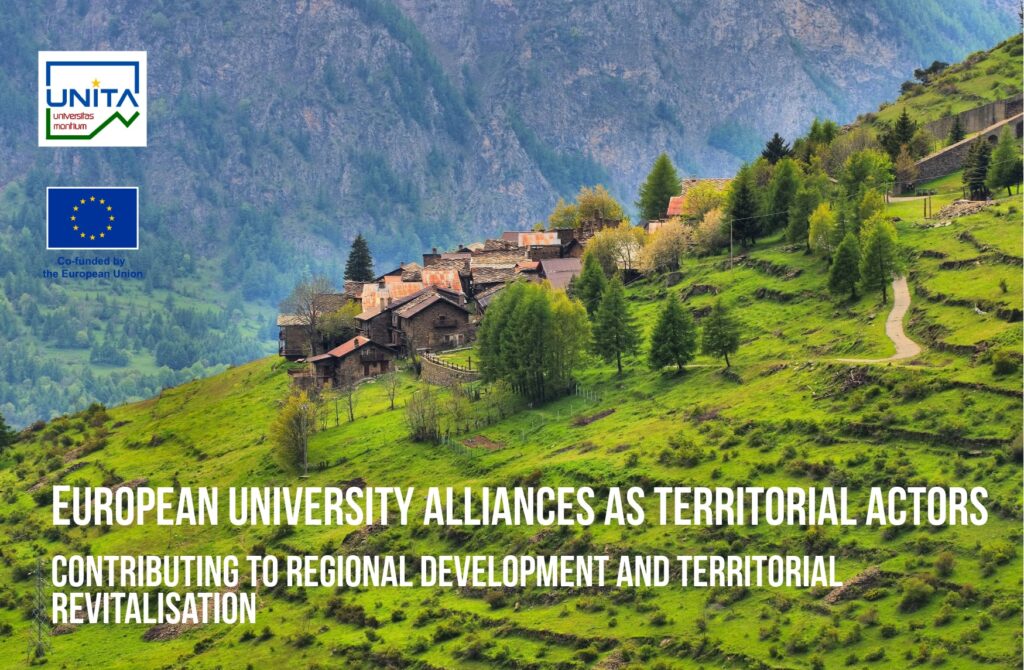
Through policy dialogue and the exchange of experiences among Alliances operating in peripheral areas, such as mountain, rural, coastal and cross-border regions, the conference aims to identify practical pathways for strengthening cooperation between European, national and regional actors. More than a forum for discussion, the event seeks to generate concrete policy recommendations and contribute to the debate on the next generation of Cohesion Policy, positioning European University Alliances as key partners in building more resilient, competitive and inclusive territories across Europe.
Programme
09:00 – 09:30 |Participants’ Registration and welcome coffee
09:30 – 9.45 | Welcome and Opening Remarks
9.45-10.15|Keynote: Toward 2034 Cohesion Policy and European University Alliances
An overview of the future EU Cohesion Policy framework and the emerging National and Regional Partnership Plans, and of the future European University Alliances, opening the reflection on how EUAs can become strategic partners in regional development and territorial governance.
10.15- 10.45|Territorial Impact of Higher Education, the role of the European Alliances
How higher education institutions and European University Alliances contribute to talent retention, innovation, skills development and regional resilience. It will highlight their growing role within local innovation ecosystems and EU territorial policies.
10:45– 11.00 | Coffee Break
11.00- 11.45 |1st Roundtable: Education, Mobility, Lifelong Learning and Skills for Territorial Value
The discussion will explore how mobility, flexible learning pathways and micro-credentials can strengthen opportunities in peripheral regions while supporting the objectives of the European Education Area and the Union of Skills
11.45-12.45|2nd Roundtable: Innovation Ecosystems
European University Alliances will share experiences on fostering innovation, research and quadruple-helix collaboration with regional stakeholders to address territorial challenges and support sustainable development.
12.45– 13.45 |Light Lunch
13.45 – 15:50| Case studies, needs and best practices
After framing the future EU trends regarding Cohesion and EUAs and hearing the voices of EUAs on what they currently do within their territories, the event will host a moment to hear the voices of key territorial actors and students/youth representatives from peripheral areas.
Core question: What are the territorial stakeholders’ needs? And what could be the role of EUAs?
The panel will host two core groups of participants: territorial stakeholders that might benefit from collaboration with alliances and european youth in peripheral territories, which are among the most affected stakeholders when discussing the Higher Education role.
13.45 – 14.30 | Case studies, needs and best practices: Territorial stakeholders
Representatives from regional networks and local authorities will present concrete examples of collaboration between universities and territories, showcasing good practices that strengthen regional resilience and place-based development.
14.30-15.10 | Case studies, needs and best practices European Youth in Peripheral Areas
Students and youth organisations will discuss the challenges and opportunities facing young people in peripheral regions, with a focus on the “Right to Stay”, access to higher education and talent retention.
15:10 – 15:30 | Coffee break
15:30- 16.45| Co-creation working sessions
Participants will work collaboratively around the core themes of the event, to develop policy recommendations, requests and identify some preliminary actions that could strengthen the contribution of European University Alliances in their territories.
16.45-17.00| Wrap-Up & Next Steps
The conference will conclude with a summary of the key messages and the presentation of the next steps, including the finalisation of a joint position paper and future cooperation among participating stakeholders