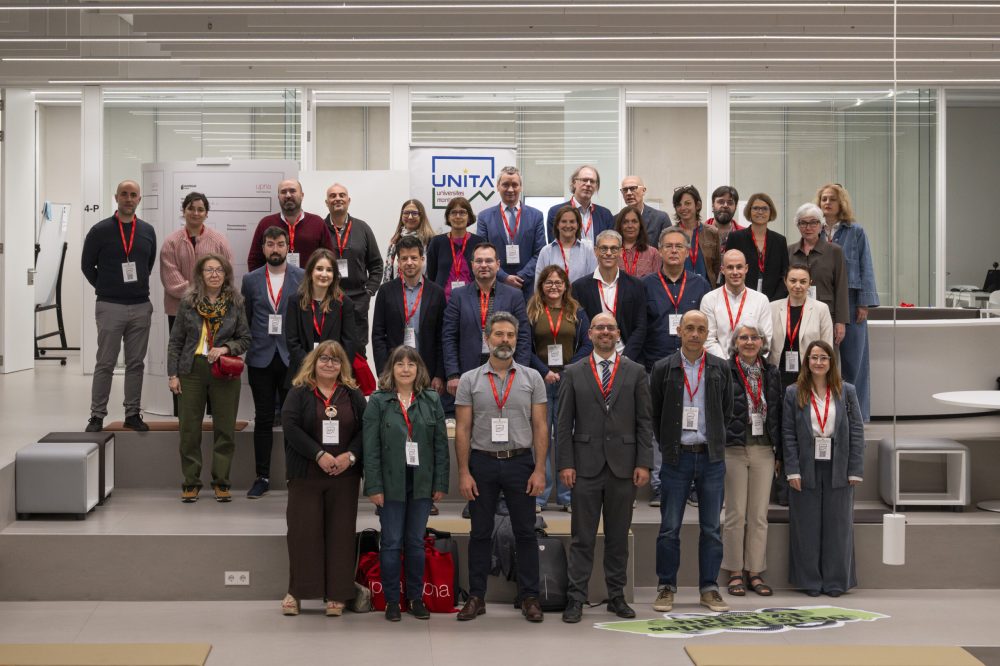
UPNA recently hosted a meeting of academic and administrative staff from several universities within the UNITA alliance, with the aim of advancing the design and future implementation of joint degrees among partner institutions.
The launch of UNITA joint degrees is a strategic factor in consolidating the Alliance and also represents an opportunity for participating universities to expand their international academic mobility offerings.
Viable proposals
During two working sessions, nearly 40 lecturers and administrators collaborated on defining joint bachelor’s and master’s degree programmes. The work was based on eight specific academic proposals previously selected for their feasibility and suitability to meet the requirements for European joint degrees.
Participants, organised into previously established inter-university groups, addressed key aspects related to the implementation of these programmes, covering academic and organisational matters as well as the regulatory requirements needed for coordination among institutions from different countries.
European joint degrees
European joint degrees, promoted by the European Commission through initiatives such as Erasmus Mundus, are academic programmes jointly designed and organised by two or more universities, allowing students to obtain a single official degree.
These academic programmes enable students to enhance their educational experience by engaging with different educational and cultural systems, while also improving their professional profile by providing them with internationally recognised qualifications.
The establishment of joint European degrees therefore represents a decisive step towards consolidating a more integrated, competitive, and globally attractive European Higher Education Area.