


UBI a pioneer in the European Student Card

The University of Beira Interior (UBI) is the first portuguese academy to automatically and digitally issue an identification card that is intended to be recognized throughout Europe. UBI will shared its experience in Lisbon. A Universidade da Beira Interior (UBI) é a primeira academia nacional a emitir, de forma consistente, o Cartão de Estudante Europeu (ESC), iniciativa que facilita a identificação do estatuto universitário fora de Portugal. Este foi um dos motivos do convite para partilhar esta boa prática no “European Student Card Initiative Day”, que decorreu em Lisboa, no Instituto Superior Técnico. A emissão do ESC para os estudantes da UBI é feita no momento da matrícula/inscrição, após pedido de consentimento, e começou a ser aplicada no âmbito de uma iniciativa da aliança UNITA – Universitas Montium, que a UBI integra. A ideia do ESC é funcionar como um “passaporte” europeu que é reconhecido nos países participantes, garantindo autenticidade dos dados, reduzindo fraudes e facilitando o processo para ambas as partes, sem ser necessário emitir um novo cartão. Com a sua implementação geral, espera-se que os estudantes passem a beneficiar de vantagens, em especial durante a participação em programas de intercâmbio como o Erasmus+. Entre os benefícios, estão os descontos, em alimentação, por exemplo, o acesso a serviços em estabelecimentos fora das instalações académicas, ou espaços reservados no campus universitário, como bibliotecas ou espaços desportivos. “O Cartão Europeu de Estudante é uma iniciativa essencial para melhorar a experiência de mobilidade estudantil na Europa, promovendo uma rede de apoio e serviços mais inclusiva e eficiente para estudantes e instituições”, sintetiza a Agência Nacional Erasmus+ Educação e Formação. Esta quinta-feira, no “European Student Card Iniciative Day”, a UBI participa na mesa-redonda “Implementar e Potenciar a ESCI nas IES”, no “Debate aberto sobre o Presente e o Futuro da ESCI | Q&A” e dinamiza ainda o “Workshop 2: ESC”, pelo pioneirismo nacional na emissão do Cartão Europeu. O engenheiro Sérgio Nunes, da Área de Sistemas e Desenvolvimento dos Serviços de Informática da Universidade, é quem vai intervir nestes momentos. A atividade decorre ao longo de todo o dia e conta com a participação de Joaquim Mourato (Diretor-Geral do Ensino Superior), Vanessa Debiais-Sainton (Head of Higher Education Unit, European Commission – Directorate General for Education, Youth, Sport and Culture) e Cristina Perdigão (Diretora da Agência Nacional Erasmus+ Educação e Formação), entre outros.
Signature of two agreements for R&I activities in UNITA

In Brescia, during the UNITA Governance Board held on the 28th and 29th of October 2024, two important agremeents have been signed: the PhD cotutelles protocol , and the shared infrastructures agreement. Firsly signed in 2022, these two agreements have been enlarged to the new partners, to demonstrate the continuous commitment of our institutions in developing strong collaborations in PhD co-tutelles and the sharing of research resources and infrastructures. A l’occasion des réunions rassemblant l’ensemble des recteurs de l’Alliance UNITA, les recteurs ont pu signer ces deux accords, symbolisant l’engagement commun vers une intégration croissante des activités de recherche et d’innovation au sein de l’Alliance UNITA. Accord de cotutelles de thèses En 2022, un premier protocole de cotutelles de thèse au sein d’UNITA avait été signé par les six partenaires historiques, établissant un cadre commun pour la mise en œuvre de cotutelles de thèse au sein de nos universités. Ce document a été construit et réfléchi par le réseau des directeurs d’école doctorale UNITA, un groupe de travail ad hoc créé afin de construire un véritable réseau des écoles doctorales UNITA, à même de partager l’ensemble des sujets traités par ces services. Grâce à ce protocole, 52 thèses en cotutelle ont pu bénéficier d’un accompagnement et d’un suivi précis et adapté, dans tous les domaines de recherche couverts par nos établissements. Aussi, nous pouvons mentionner que ce travail de cadre des thèses en cotutelles a pu mener à l’obtention d’un financement Horizon Europe MSCA-COFUND, permettant le recrutement et le financement de 42 cotutelles de thèse au sein d’UNITA et dans le domaine du patrimoine culturel. Nous partageons le souhait de prolonger et de renforcer ces thèses en cotutelle UNITA, dispositif participant à la création d’une communité UNITA dédiée à la recherche dynamique et tournée vers l’avenir. Accord sur le partage d’infrastructures En 2022, dans le cadre du projet Re-UNITA, les six partenaires historiques UNITA s’étaient engagés à rendre accessibles leurs infrastructures de recherche aux autres établissements de l’Alliance, grâce à ce document de cadrage. En Octobre 2024, cet accord a été ouvert aux nouveaux partenaires de l’Alliance, rappelant les principales conditions de partage d’infrastructures et de ressources. Nos institutions disposent de ressources et d’infrastructures de recherche pointues, à même de permettre à nos chercheurs à contribuer à l’excellence de la recherche au sein de l’espace européen. Grâce à l’Alliance UNITA, nos établissements ont la possibilité de mutualiser ces équipements, afin de permettre à notre communauté de recherche de disposer de davantage de ressources pour leurs activités de recherche. En 2025, un appel à financement sera diffusé au sein de l’Alliance UNITA, afin de soutenir le partage d’infrastructures de recherche, et de contribuer à la mise en relation entre différentes équipes de recherche.
43 researchers met in Pau for the Cultural heritage matching event

On the 17th and 18th of October, UPPA hosted the Cultural heritage matching event dedicated to “Green Heritage : Rethinking Rural Areas in the 21st Century”. Plenary sessions and face-to-face meetings have been key opportunities to foster the emergence of new collaborative projects in our Alliance! Cet événement, dédié à la rencontre entre enseignants-chercheurs intéressés par cette thématique et issus de disciplines très variées, avait pour objectif d’encourager les rencontres et l’émergence de nouveaux projets collaboratifs. La première matinée a permis d’accueillir les participants et de présenter les objectifs du hub Patrimoine culturel, le projet CHORAL et d’assister à la conférence inaugurale de M. Carlos Labarta, professeur d’architecture à l’Université de Saragosse. Durant l’après-midi, les enseignants-chercheurs ont pu présenter leurs activités de recherche en 90 secondes, afin de proposer un premier aperçu de leur périmètre de recherche. Ensuite, 8 sessions de rencontres bilatérales ont permis aux enseignants-chercheurs d’échanger et d’explorer les pistes de collaborations, sur la base de leurs intérêts communs. Enfin, l’après-midi du vendredi 18 octobre était consacré à la présentation des opportunités de financement proposées par l’alliance UNITA, et notamment les starting grants. Ces « matching events » constituent un dispositif phare afin d’encourager les collaborations de recherche au sein de l’alliance UNITA. D’ici à juin 2025, deux événements de ce type seront organisés pour chaque hub dans les différentes universités UNITA. Les enseignants-chercheurs de l’UPPA seront invités à y participer prochainement.
The 2nd ESU Conference of Student Organizations from European Alliances, hosted by UVT
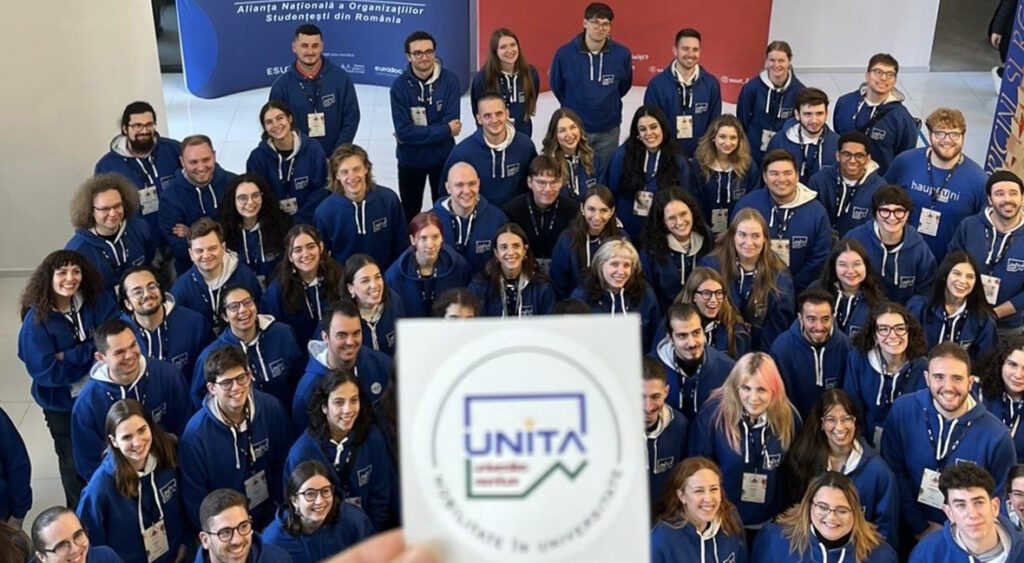
West University of Timișoara recently hosted the 2nd ESU Conference of Student Organizations from European Alliances from October 31 to November 2, 2024. Organized by the European Students’ Union (ESU) and the National Alliance of Student Organizations in Romania (ANOSR), this event was a significant gathering for student representatives from European University Alliances. The conference addressed crucial topics like student representation, inclusion, and mobility in European higher education, with sessions exploring the role of student voices in the development of European Alliances, social inclusion, and the future of student involvement in educational policy. Universitatea de Vest din Timișoara a găzduit a doua Conferință ESU a Organizațiilor Studențești din Alianțe Europene În perioada 31 octombrie – 2 noiembrie 2024, Universitatea de Vest din Timișoara a fost gazda celei de-a doua Conferințe ESU (European Students’ Union) a Organizațiilor Studențești din Alianțe Europene. Evenimentul, organizat de Uniunea Studenților Europeni (ESU) și de Alianța Națională a Organizațiilor Studențești din România (ANOSR), a reunit reprezentanți ai studenților din Alianțele Universităților Europene pentru a aborda teme esențiale din domeniul educației superioare. Scopul conferinței a fost să faciliteze discuții semnificative pe teme critice pentru studenți și pentru viitorul învățământului superior european, inclusiv reprezentarea studenților, mobilitatea și incluziunea în cadrul educației. Agenda din acest an a inclus sesiuni de interes major, printre care explorarea rolului activ al vocii studenților în dezvoltarea Alianțelor Europene, analiza dimensiunii sociale a incluziunii și dezbateri despre viitorul implicării studenților în formularea politicilor educaționale. De asemenea, conferința a oferit ocazia unor discuții cu reprezentanți ai Comisiei Europene pe tema pachetului de învățământ superior și a inclus o sesiune dedicată conceptului de diplomă europeană, un subiect de mare interes pentru studenții din întreaga Europă. Workshopurile desfășurate au urmărit să ofere participanților noi perspective și abilități pentru construirea unor cadre educaționale incluzive, contribuind astfel la dezvoltarea unui învățământ superior accesibil și echitabil. Pe lângă sesiunile de lucru, participanții au avut ocazia să descopere orașul Timișoara printr-un tur ghidat și să ia parte la diverse activități culturale menite să întărească legăturile în cadrul comunității studenților europeni. Aceste momente culturale au contribuit la crearea unui mediu de colaborare și unitate între organizațiile studențești din Alianțele Europene, consolidând rețeaua de colaborare internațională și sprijin reciproc.
The “ACADEMIC DIPLOMACY in the Context of European University Alliances” Conference

The conference “ACADEMIC DIPLOMACY in the Context of European University Alliances” took place on October 31 and November 1, 2024, at the West University of Timișoara. Gathering leaders from education and diplomacy, the event explored the impact of European university alliances on Romania’s education and research sectors and examined opportunities for reconnecting with the Romanian diaspora. With participation from Romania’s Foreign Minister Luminița Odobescu, seven Romanian ambassadors, and representatives of Romanian universities in European alliances, the conference included discussions on international academic collaborations and the role of these alliances in supporting research with a global dimension in Romania. Conferința „DIPLOMAȚIA ACADEMICĂ în contextul Alianțelor de Universități Europene” s-a desfășurat la Universitatea de Vest din Timișoara În perioada 31 octombrie – 1 noiembrie 2024, Universitatea de Vest din Timișoara a fost gazda conferinței „Diplomația Academică în contextul Alianțelor de Universități Europene.” Evenimentul a reunit lideri de seamă din domeniul educației și al diplomației, care au discutat despre influența alianțelor universitare europene asupra educației și cercetării din România, precum și despre oportunitățile pe care aceste alianțe le creează pentru a reconecta diaspora academică românească. La conferință au participat Ministrul Afacerilor Externe, doamna Luminița Odobescu, șapte ambasadori români acreditați în străinătate, reprezentanți ai celor 21 de universități românești membre ale unor alianțe europene, dar și alți actori interesați de această temă. Programul evenimentului a inclus momente cheie, cum ar fi masa rotundă intitulată „Diplomația Cunoașterii și Științei: România în Europa prin Alianțele de Universități Europene.” În cadrul acestei sesiuni, participanții au analizat beneficiile și contribuția României în aceste alianțe, din perspectivă diplomatică, educațională și de cercetare. De asemenea, a fost organizat workshop-ul „Diploma europeană. Perspective naționale și europene,” unde au fost prezentate bune practici și experiențe de succes din diverse universități. Pe parcursul celor două zile, participanții au avut ocazia să interacționeze și să schimbe idei despre viitorul educației și cercetării în context european. Rețelele de colaborare interuniversitară au fost subliniate ca fiind esențiale pentru dezvoltarea educației superioare. În încheierea evenimentului, pe 1 noiembrie, a avut loc o sesiune specială dedicată reconectării cu diaspora academică românească. Această sesiune a scos în evidență rolul alianțelor de universități europene în sprijinirea cercetării și educației de dimensiune internațională în România, contribuind astfel la o abordare mai globalizată și incluzivă „acasă”.
The Community Welfare Project for Campertogno: a new model of solidarity and sustainability in the UNITA European Alliance

Through Rural Mobility, the initiative aims for “resource mobility” and as activities to connect different generations and skills. Il 5 ottobre 2024 è stato presentato a Campertogno, nel Vercellese, il nuovo Progetto di Welfare di Comunità sviluppato dalla Dottoressa Sara Marovelli, studentessa magistrale in Scienze del Governo, nell’ambito della sua mobilità tramite il programma UNITA Rural Mobility. Nato in seno all’alleanza europea UNITA, di cui l’Università degli Studi di Torino è ente coordinatore, UNITA Rural Mobility promuove la collaborazione tra università e realtà nei territori per affrontare le sfide delle aree rurali. Il progetto di Welfare di Comunità mira a costruire una rete di sostegno che rafforzi l’accesso ai servizi essenziali e promuova la coesione sociale; vengono pianificati spazi pensati per mettere in connessione competenze e generazioni diverse. Tra questi, spiccano laboratori di artigianato locale, corsi digitali per anziani tenuti dai giovani del paese, spazi di co-working per studenti e professionisti e molto altro. Queste iniziative mirano non solo a valorizzare il patrimonio culturale e le abilità locali, ma anche a creare opportunità di scambio e apprendimento reciproco, rafforzando il senso di comunità e l’integrazione sociale. Grazie a Rural Mobility, l’iniziativa punta a una “mobilità delle risorse” e ad attività per connettere diverse generazioni e competenze. La dottoressa Marovelli ha illustrato come questi obiettivi siano possibili solo grazie alla sinergia e al sostegno della comunità, promuovendo soluzioni innovative per il contesto rurale del paese. La sindaca di Campertogno, Miriam Giubertoni, ha elogiato il progetto e il coinvolgimento dell’Università di Torino, riconoscendo quanto UNITA rappresenti una grande opportunità per dare visibilità e concretezza a iniziative di questo tipo nei territori. Il Progetto di Welfare di Comunità, frutto della studentessa e della collaborazione internazionale dell’alleanza UNITA, potrà rappresentare un modello di welfare rurale che ispiri altre comunità rurali europee e di ricerca verso un futuro più solidale e sostenibile.
Survey on the European Student Card initiative. Deadline: 15th November 2024
The UNITA Alliance (https://univ-unita.eu/Sites/) is interested in understanding students’ opinions about the European Student Card (ESC (https://erasmus-plus.ec.europa.eu/european-student-card- initiative/card)), which is very important for improving the services offered by member universities as well as other universities. Discover some of the benefits of the European card: Deadline: 15th November 2024. Fill in the survey: https://surveysbg.univ-unita.eu/index.php/686999 (https://surveysbg.univ- unita.eu/index.php/686999)
Governance Board meeting at University of Brescia

From October 28th to 29th the University of Brescia had the pleasure to host the Governance Board of UNITA. The University of Brescia hosted the Governance Board of UNITA. Two-day meeting in which Rectors, Vice-Rectors, faculty and staff of the alliance Universities discussed activities and next steps, drafting a shared strategic plan. An occasion that involved 60 people from 12 univerisites to enhance the quality and competitiveness of European higher education throught educational and scientific cooperation and student, faculty and staff mobility.
Joint research and mobility of students, faculty and staff: the President of the University of Antananarivo and the General Director of the Malagasy Ministry of HE and Research visiting Turin
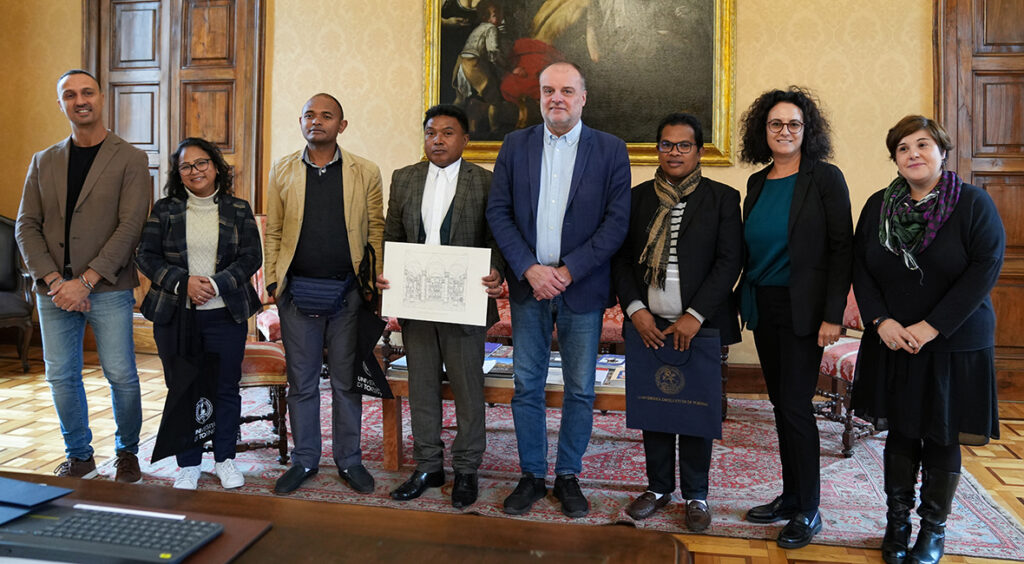
The delegation from the University of Antananarivo was welcomed to the Rector’s Office on Oct. 9 by Rector Stefano Geuna. Diversi i temi trattati, ma soprattutto la volontà di rafforzare le collaborazioni già esistenti con i dipartimenti di UniTO e di svilupparne di nuove, nell’ambito del dottorato SUSTNET e del Dottorato Internazionale dell’Oceano Indiano in corso di creazione nell’ambito del progetto DOCET4AFRICA (ERASMUS+ KA2 CBHE, Contract 101083139). In quest’ottica, dopo la visita, il Rettore dell’Università di Antananarivo, il Direttore Generale della Ricerca Scientifica del Ministero dell’Insegnamento Superiore e della Ricerca (MESUPRES) e i tecnici amministrativi della delegazione malgascia hanno proseguito i lavori con i docenti del Dipartimento di Scienze della Vita e Biologia dei Sistemi, del Dipartimento di Scienze Agrarie, Forestali e Alimentari e con i colleghi dell’Ufficio Internazionalizzazione del Polo di Scienze della Natura e del Polo di Agraria e Medicina Veterinaria, oltre che dell’Ufficio Dottorati. Le visite hanno permesso ai docenti dei Dipartimenti coinvolti di incontrare i colleghi malgasci e di discutere sia dell’avanzamento dei progetti attivi (DOCET4AFRICA, ERASMUS+ KA171, TNE, ecc.), sia dei dettagli di nuove collaborazioni in ambito di ricerca e mobilità di studenti, docenti e staff. L’Università di Antananarivo è uno dei principali partner del Madagascar e dell’Oceano Indiano interessati alle attività di UniTO e dell’Alleanza UNITA. Con UniTO Antananarivo ha già all’attivo accordi di mobilità internazionale con quattro Dipartimenti. UA collabora inoltre con l’Alleanza UNITA nell’ambito del progetto Geminae, un network di 30 Università non europee che condividono con le Università UNITA tematiche chiave quali l’uso delle lingue romanze, la cooperazione per il consolidamento dell’Iniziativa delle Università Europee, il coinvolgimento della comunità accademica nell’internazionalizzazione e la definizione di un modello di internazionalizzazione sostenibile e socialmente responsabile oltre che sulla costruzione di programmi internazionali all’avanguardia incentrati sugli studenti.
Re-UNITA Project launches e-book on research challenges in mountain regions

The Re-UNITA project – Research for UNITA Project will end on October 31st, but not before seeing the launch of an E-Book that portrays the results obtained in the two-day Workshops, which took place at the University of Beira Interior (UBI) last April. This event was promoted by the Re-UNITA project, which aims to promote research activities within the scope of the UNITA Alliance – Universitas Montium. The Re-UNITA Workshops consisted of presentations and round tables in the scientific areas of Circular Economy, Cultural Heritage and Renewable Energy. The activities developed were an excellent networking opportunity for researchers from partner Universities, aiming to discuss scientific development, and advances and main research challenges in each of the scientific areas. The different sessions also promoted the establishment of new collaborations and possibilities for joint responses to international calls for projects or co-supervision of theses. According to the Re-UNITA Project Coordinator, Frederic Marias: “This Workshop serves as a unique platform to start conversations, foster connections between researchers, and explore the latest advances in Re-UNITA’s research activities. Our goal is to facilitate an environment where insights transcend traditional boundaries, allowing participants to engage in meaningful dialogue and collaborative projects.” The E-book entitled “Re-UNITA Workshops – Research Challenges for Cultural Heritage, Circular Economy and Renewable Energies in rural and mountain areas” and published through UBI Edições, brings together the results of the presentations and discussions held in the three thematic Workshops, becoming available in free access to the entire academic and scientific community. As the UBI´s Vice-Rector of Research, Innovation and Development, Sílvia Socorro, highlights: “The e-book compiles the collective knowledge generated during the workshops. Includes the contributions of participants in the sessions of Part I – Presentation of research projects (8), and the topics of discussion in the Round Table sessions of Part II (16). Overall, details of ongoing projects, discussion summaries, and important messages are provided. This e-book is a valuable resource and a testament to the impactful results of the Re-UNITA project in promoting collaborative research efforts across the UNITA alliance. It provides knowledge and practical strategies that can be applied in various contexts to drive positive change, empowering our community to further develop UNITA’s research identity.”