


UNITA WEEK PAMPLONA
Between 25 and 28 February, Public University of Navarra (UPNA) will host UNITA WEEK 2025, the most important annual event held by the Alliance. More than 150 people, representing the ten partner universities and two associate universities that make up UNITA, will meet for three intense days of work to determine the level of progress of the project and establish the future strategies for the Alliance.
Cell and gene therapies explored at UBI by European students

The Blended Intensive Program (BIP) fostered international collaboration among university students in the fields of Biomedical and Biological Sciences. A Faculdade de Ciências da Saúde da Universidade da Beira Interior (FCS-UBI) organizou o programa internacional Blended Intensive Programme (BIP), dedicado ao tema das terapias celulares e génicas. A componente presencial do BIP decorreu entre os dias 30 de junho e 4 de julho, reunindo 21 estudantes universitários das áreas das Ciências Biomédicas e Biológicas de universidades pertencentes à aliança UNITA – Universitas Montium. Esta iniciativa permitiu a troca de conhecimentos, a colaboração internacional e o desenvolvimento de projetos inovadores. Além dos estudantes da UBI, estiveram presentes estudantes das universidades de Saragoça (Espanha), Turim (Itália), Brescia (Itália) e do Politécnico da Guarda (IPG). A equipa que acompanhou permanentemente os estudantes foi composta por docentes das quatro instituições de Ensino Superior que organizaram o BIP: UBI (Mafalda Fonseca), IPG (Sónia Miguel), Universidade de Saragoça (José Villar) e Universidade de Turim (Giorgio Merlo). O programa científico incluiu seminários e workshops dinamizados por especialistas em Terapia Celular CAR-T, Terapia Génica, Terapias com Células Estaminais, Imunoterapia, Vacinas de DNA, Medicina Regenerativa e Biologia Sintética, promovendo o envolvimento dos estudantes através de discussões e atividades práticas em grupo, com interações entre colegas para estimular a colaboração internacional e o desenvolvimento de competências de comunicação. Os participantes tiveram ainda oportunidade de participar em atividades culturais, incluindo um percurso pedagógico pelo Estrela Geopark (UNESCO), guiado por geólogos e biólogos, bem como uma visita guiada à cidade da Covilhã, com explicação das principais características, factos históricos e murais de arte urbana. A iniciativa permitiu aprofundar a colaboração internacional e o crescimento académico e científico dos futuros profissionais da área das Ciências Biomédicas. O feedback dos estudantes foi bastantes positivo e o BIP vai ter uma nova edição em 2026, com organização da Universidade de Turim.
Election of the UNITA Student Assembly representatives
https://univ-unita.eu/Sites/unita/en/Pagina/student_assembly#student_assembly_elections
UNITA Starting Grants: Results of the Calls on Circular Economy, Environment, and Digital Transition

The UNITA Alliance is pleased to announce the results of the Starting Grants for Research calls, dedicated to the thematic hubs of Circular Economy and Environment and Digital Transition. These calls aim to promote innovative, interdisciplinary, and collaborative research projects led by early-career researchers within the UNITA alliance. Following a highly competitive selection process, a number of promising projects have been awarded funding across the two thematic areas. All proposals were evaluated by expert committees, and the results have been communicated to the applicants. Circular Economy and Environment This thematic hub addressed two specific research areas: Topic 1 – Technical and Innovative Solutions 7 projects were selected: Topic 2 – Social, Economic and Legal Challenges Digital Transition The Digital Transition hub focused on key challenges at the intersection of technology and sustainability: Topic 1 – Intelligent Information Processing for the Digital Transition: Promises and Risks 4 projects were selected: Topic 2 – Green and Secure ICT for the Digital Society in the Anthropocene 2 projects were selected: The selected projects reflect the Alliance’s strong commitment to scientific excellence and its strategic vision in addressing global challenges through transdisciplinary cooperation. UNITA extends the congratulations to all applicants and look forward to following the development and impact of the selected initiatives in the coming months.
UNITA BIP “Beyond Borders”: A record-breaking edition for inter-alliance cooperation
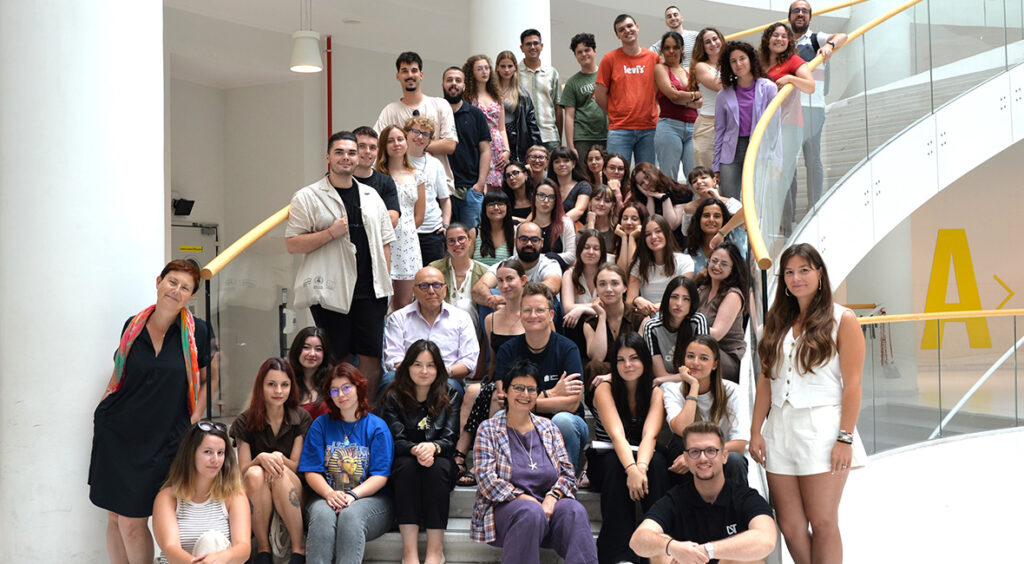
The 2025 edition of Beyond Borders: Migrations, Identities, Languages, the Blended Intensive Programme (BIP) organized by the University of Turin under the UNITA – Universitas Montium Alliance, marked a new milestone in the internationalization of higher education. Held from July 21st to 25th, this year’s programme set a record in participation, with more than 40 students and staff taking part in a truly European learning experience. What made this edition particularly significant was its inter-alliance dimension. Beyond Borders welcomed participants from both UNITA and the Transform4Europe Alliance, reinforcing synergies between two major European University Alliances and highlighting the potential of cross-network collaboration in addressing global challenges. Focusing on the theme of borders and barriers, the programme offered a rich and interdisciplinary exploration of how physical, social, political, and economic boundaries shape our societies. Students engaged in lectures, interactive workshops, and critical debates, designed to foster reflection on contemporary issues such as migration, identity, inequality, and international cooperation. A diverse group of academic staff contributed to the success of the initiative, including faculty from Saarland University (Germany), a key member of the Transform4Europe Alliance. Their participation added valuable perspectives and enhanced the transnational scope of the discussions. The Beyond Borders BIP continues to consolidate its role as a flagship initiative within the UNITA Alliance, combining academic excellence, intercultural dialogue, and European values. By promoting intensive, short-term mobility in a blended format, the programme reflects the European Commission’s vision of a more connected and inclusive European Education Area. The next edition is already planned for July 2026, and promises to further expand its reach and impact, strengthening partnerships and offering new opportunities for students and staff across Europe to engage in meaningful, interdisciplinary dialogue—beyond borders.
Staff Week Romance.pt
Once again, UBI will host Staff Week Romance.pt from July 14th to 18th, welcoming teaching and administrative staff from its partner universities. This event promises to be a unique opportunity for intercultural and linguistic exchange.
Information webinar – Starting grants on Research – Inclusive societies
Join the informative webinar on July 2nd at 15.00 (CEST) on this link, and learn more about the call Starting grant on Research and the application process! Information on the call: https://www.research.univ-unita.eu/en/events/starting-grant-call-inclusive-societies.html
Information webinar – Starting grants on Research – Global health
Join the informative webinar on July 1st at 15.00 (CEST) on this link, and learn more about the call Starting grant on Research and the application process! Information on the call: https://www.research.univ-unita.eu/en/events/starting-grant-call-global-health.html
UBI Hosts Staff Week Dedicated to Intercomprehension in Romance Languages
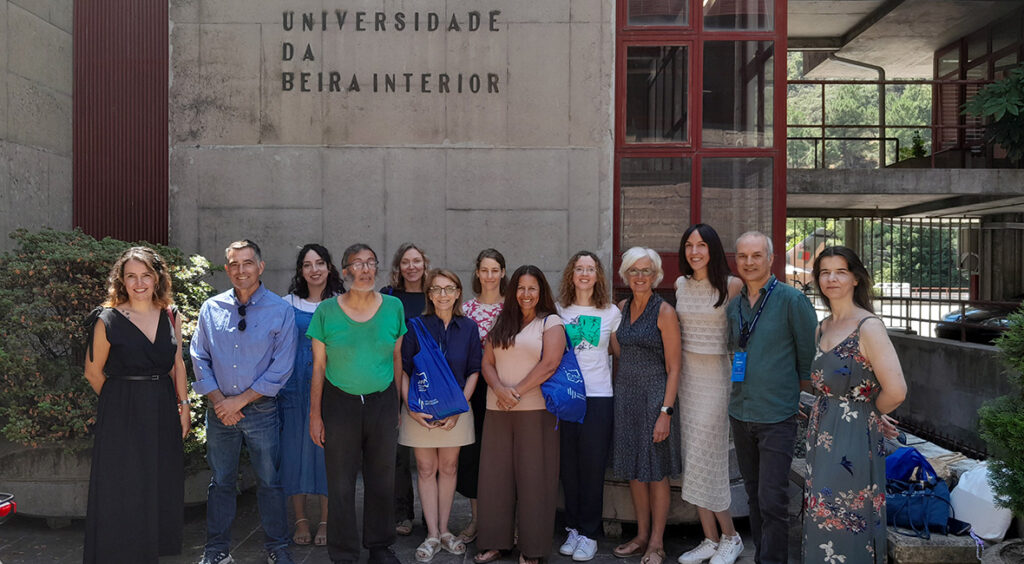
he University of Beira Interior (UBI) hosted, for the third time, the Staff Week for Intercomprehension in Romance Languages, within the framework of the UNITA – Universitas Montium alliance. A iniciativa reuniu nove participantes oriundos de instituições parceiras, num programa que combinou formação linguística, partilha intercultural e visitas institucionais. Ao longo de vários dias, os participantes aprofundaram os seus conhecimentos sobre a língua e cultura portuguesas, desenvolveram competências de intercompreensão entre línguas românicas e enriqueceram o vocabulário necessário para comunicar em Português, tanto na forma oral como escrita. Além das atividades letivas, o programa integrou momentos de descoberta cultural. No dia 15 de julho, os participantes tiveram oportunidade de visitar o centro histórico da Covilhã, explorando o património da cidade anfitriã. Já no dia 17, o grupo deslocou-se ao Instituto Politécnico da Guarda (IPG), também membro da aliança UNITA, onde participou numa sessão de intercompreensão durante a manhã e, à tarde, num World Café subordinado ao tema da Cidadania Europeia, em colaboração com os colegas da Tarefa 2.5. O dia terminou com um passeio guiado pelo centro histórico da Guarda, permitindo um contacto direto com a identidade da cidade mais alta de Portugal. Entre os participantes estiveram representantes das instituições parceiras Université Savoie Mont Blanc (USMB) e Université de Pau et des Pays de l’Adour (UPPA), de França, da Haute École Spécialisée de Suisse Occidentale (HES-SO), da Suíça, bem como da Universidad de Zaragoza (Espanha), da Università degli Studi di Torino (UniTo) e da Università degli Studi di Brescia, ambas de Itália. A semana foi, acima de tudo, uma experiência de partilha e valorização do património linguístico comum, que reforça os laços entre instituições e promove uma verdadeira comunidade académica europeia multilingue.
Chernivtsi National University delegation visits the University of Turin

From July 7 to July 11th, 2025, the University of Turin hosted a delegation of three colleagues from the Yuriy Fedkovych Chernivtsi National University (CHNU), an associated partner of the UNITA Alliance, within the framework of the Erasmus+ KA171 mobility programme between UniTo and CHNU. The visit marked a significant opportunity to further strengthen academic and administrative cooperation between the two institutions. The week began on Monday with the participation of the CHNU delegation in the UNITA Blended Intensive Programme (BIP) opening session titled “Italian language for staff and teachers”. This session offered an introductory overview of the Italian language and culture, providing a valuable starting point for their immersion into the academic environment of the University of Turin. The delegation was also involved in a cultural walk through the historic city center, organized in collaboration with Erasmus Student Network Torino. On Tuesday, the guests were welcomed at the Department of Humanities and visited the Aldo Moro Library, guided by Professor Roberto Merlo. The visit offered insight into the department’s educational resources and academic organization. The programme continued with a meeting at the International Office of the Hub of Humanities, followed by a guided visit to the Campus Einaudi Library by Dr. Fabio Giuffré. In the afternoon, the group was received at the International office of the Hub of Natural Sciences, where they had the opportunity to explore potential areas of collaboration in scientific education and research. The last day, the delegation toured the LIFE Lab – Laboratory for Innovation in Philosophy and Education, once again accompanied by Dr. Giuffré. The visit emphasized innovative approaches in philosophical and educational practices. The day concluded with a formal meeting with the Academic Committee responsible for the Erasmus+ KA171 agreement at UniTo. This successful mobility visit not only enhanced mutual understanding but also laid the groundwork for future joint initiatives under the UNITA Alliance and Erasmus+ programmes.