


Rowena Mathew (USMB), Andreea E. Vantu (UNITBV), and Ilaria Guia (UNITO) win “My 3-Minute PhD Thesis” competition

PhD candidate Rowena Mathew, a student at Université Savoie Mont Blanc (USMB), was the winner of the 2025 edition of the “My 3-Minute PhD Thesis” Andreea E. Vantu, from Universitatea Transilvania din Brașov (UNITBV), and Ilaria Guia, from Università degli Studi di Torino (UNITO), took second and third place, respectively. UPNA was the university responsible for organizing the final of the contest. A total of eighteen PhD candidates from nine universities of the Alliance participated in the final round. The jury, composed of researchers from all the member universities, evaluated each presentation based on pre-established criteria. The event, open to the public, was also streamed live, allowing audiences across all UNITA universities to follow the competition. Winning Theses The winner, Rowena Mathew (USMB), from the field of energy economics, presented her thesis titled “Electric Vehicles, Solar Energy and Storage Potential” Second place went to Andreea E. Vantu (UNITBV), from the field of systems engineering, who defended her work “Uncertainty Quantification in Deep Learning-Based Classification and Regression – Application to Medical Data and Images” Ilaria Guia (UNITO) secured third place with her neuroscience thesis: “What Does Love Smell Like? Studying Dopamine in the Mouse Olfactory Bulb to Understand How Sexual Odors Are Processed in the Brain”
EU Law Rights and Remedies before National Courts: the 6th edition of the Turin Spring School on EU Integration, Law and Justice

The sixth edition of the Turin Spring School on EU Integration, Law and Justice took place at the University of Turin from 28 to 30 May 2025. This year’s edition, hosted by the Jean Monnet Chair “Civic Engagement, Rights and Remedies in EU Law”, focused on the evolving system of judicial protection in the EU, exploring the role of national courts in ensuring the effectiveness of EU rights and remedies, and addressing key issues such as direct effect, primacy, and judicial cooperation. From 28 to 30 May 2025, the sixth edition of the Turin Spring School on EU Integration, Law and Justice was held at the Luigi Einaudi Campus of the University of Turin, focusing on the theme:“EU Law Rights and Remedies before National Courts: Continuity and Change.” The Spring School offered a critical reflection on the evolution of remedies provided by EU law before national courts, exploring topics such as: The School, organised within the framework of UNITA – Universitas Montium,hosted 35 participants, including university students, PhD candidates, and research fellowsfrom 12 European universities. Over the three days, the programme featured lectures by internationally renowned experts in EU law,who addressed key theoretical and practical issues related to the protection of rights and the effectiveness of judicial remedies within the EU legal order. The event, organised in collaboration with the Italian Society for International Organization – Piedmont and Aosta Valley Section,is part of the activities of the Jean Monnet Chair “Civic Engagement, Rights and Remedies in EU Law” (Prof. Stefano Montaldo),and falls within the scope of Hub 3 – Environment and Climate Change of the Department of Law’s Excellence Project. The scientific committee of the Turin Spring School includes:Francesco Costamagna, Alberto Miglio, Stefano Montaldo, and Virginia Passalacqua.Leonardo Labriola also contributed to the organisation of this year’s edition.
Cristina Prandi elected new Rector of UniTo: first woman in 621 years of history

Cristina Prandi is the new Rector of the University of Turin for the 2025–2031 term, elected in the second round of voting and officially proclaimed today by Dean Giuseppe Monateri. She is the first woman to hold this position in the 621-year history of UniTo. Cristina Prandi è la nuova Rettrice dell’Università di Torino per il mandato 2025-2031, eletta al secondo turno di votazione e proclamata oggi dal Decano Giuseppe Monateri. Si tratta della prima donna a ricoprire questa carica in 621 anni di storia di UniTo. Il Prorettore indicato dalla nuova Rettrice è Gianluca Cuniberti, docente di Storia greca. Al primo turno aveva partecipato come candidata Rettrice anche Laura Scomparin, che poi si è successivamente ritirata dalla corsa. Cristina Prandi, nata nel 1965 in provincia di Novara e cresciuta a Torino, è professoressa ordinaria di Chimica Organica al Dipartimento di Chimica di UniTo. Dopo il dottorato in Biologia e Biotecnologie, si è specializzata nella sintesi di fitormoni naturali e chimica verde. Ha ricoperto il ruolo di Vice-Rettrice per la Ricerca e coordina progetti su tecnologie sostenibili. “Sono molto emozionata – dichiara a caldo Cristina Prandi – di essere la prima Rettrice di questa storica università, spero di essere la prima tra tante. Il soffitto di cristallo diventa finalmente accessibile. Nella lunga campagna elettorale ci ha seguito passo passo una squadra allargata, ringrazio il futuro prorettore Gianluca Cuniberti e tutte e tutti quelli che ci hanno votato. Partiremo dalle azioni indicate nei primi 100 giorni con priorità riguardo l’edilizia, l’internazionalizzazione e la velocizzazione dei processi amministrativi”. “La partecipazione eccezionale registrata anche in questo secondo turno conferma – sottolinea l’attuale Rettore Stefano Geuna – la straordinaria vitalità che anima il nostro Ateneo. Una vitalità che, nel corso di questi anni di mandato rettorale, abbiamo avuto modo di apprezzare in molte occasioni e che abbiamo sempre riconosciuto come un autentico valore. Per questo l’abbiamo coltivata e tutelata, riconoscendola come una risorsa preziosa per l’intera comunità accademica. Anche per questo, l’esito del voto rappresenta un segnale chiaro: l’idea di un Ateneo conflittuale e negativo non rispecchia la visione della maggioranza della nostra comunità. Alla nuova Rettrice, prima donna in oltre 600 anni di storia, e al nuovo Prorettore vanno le nostre più sincere congratulazioni e l’augurio di un proficuo lavoro al servizio dell’Università”.
Ana Paula Duarte elected Rector of UBI
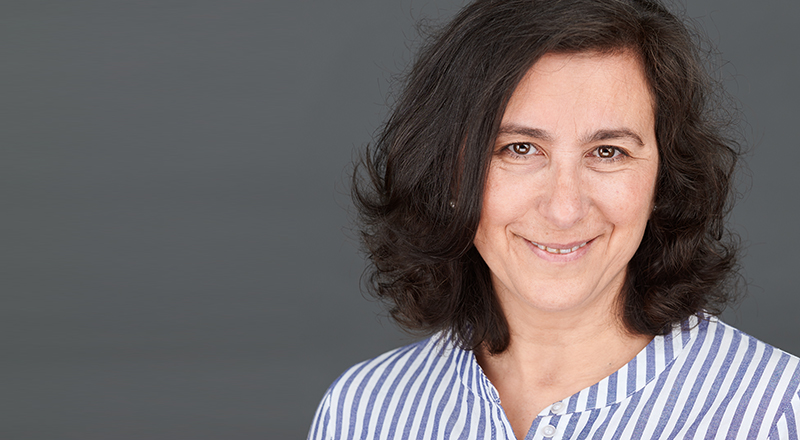
Ana Paula Coelho Duarte will be the next Rector of the University of Beira Interior (UBI), having been elected on 6 June by the institution’s General Council. She will be the sixth person to lead the Rectorate of UBI, and the first woman to hold the position. The elected Rector is 63 years old and has a degree in Pharmaceutical Sciences from the University of Coimbra. She obtained her PhD in Paper Engineering at UBI, where she also presented her Aggregation Exams in Paper Engineering. She became a Full Professor in 2009. In addition to her career as a teacher and researcher, she has participated in various bodies at UBI, notably as Vice-Rector for Research and Innovation between 2009 and 2013, having created the Research Coordination Institute, which she also chaired. She was also elected to the first General Council of UBI in 2008 and for the terms beginning in 2016, 2020 and 2024, having headed lists in the first two. She coordinated the Health Sciences Research Centre (CICS-UBI) for two successive terms between 2015 and 2019. She is currently Vice-President of the Faculty of Health Sciences for Research, Community Projects and Faculty Centre Management, a position she has held since 2017. Ana Paula Duarte is also director of the Doctorate/3rd Cycle in Pharmaceutical Sciences. She is expected to take office as Rector later this month.
Matching event of the Digital Transition hub at UPNA

On 29 and 30 May, UPNA hosted a Matching event in Digital Transition, one of the Alliance’s hubs. Under the heading ‘Green and secure ICT for the digital society in the Anthropocene’, 22 researchers from different UNITA universities addressed various areas related to sustainable ICTs, information processing and communications, IoT, cybersecurity, advanced manufacturing and Industry 4.0, among others. The aim of this meeting, which was aimed at research staff from scientific and technical areas with the same interests and willingness to work collectively on sustainable and secure digital technologies, was to strengthen and expand the UNITA research community in this particular area. In order to give continuity to the activity generated, a call for Starting Grants has been published to fund collaborative projects. These projects must respect the theme of the event and be developed by teams in which at least three UNITA universities are represented.
Matching Event of the Inclusive Societies Hub organized at UNITBV

As part of the activities dedicated to the UNITA Alliance, Transilvania University of Brașov organized a Matching Event on May 22 and 23, 2025. This event, managed by the Inclusive Societies hub, focused on the scientific topic of “Pathways to Inclusive Societies: Exploring the Role of Democracy, Institutions, Politics, Citizenship, and Information”. The main goal of this meeting was to strengthen and support the UNITA community by bringing together researchers and academic staff who shared similar or complementary interests in the field of the Inclusive Societies research hub. By organizing this event, the UNITBV team aimed to achieve several strategic objectives. The goal was to develop strong networks of UNITA researchers with interests in related thematic areas, thus facilitating the initiation of joint research projects across the entire alliance. The event was also designed to actively promote international cooperation in research and innovation and to contribute significantly to the activities of the UNITA research and innovation hub. Over the course of the two dedicated days, 29 participants were engaged in a series of dynamic and interactive activities aimed at stimulating the exchange of ideas and building partnerships. The program included a welcoming speech offered by Professor Carmen Buzea, Vice-Rector for Research of Transilvania University of Brasov, and Professor Monica Răileanu-Szeles, Co-leader of the Inclusive Societies Hub. The special guest on the first day of the event was Associate Professor Antonio Momoc, from the Faculty of Journalism and Communication, University of Bucharest, who presented his research on Populism, democracy, disinformation, and polarization. Next, short ‘elevator pitch’ presentations showcased research interests of all the participants, followed by dedicated one-to-one ‘matching’ sessions to identify potential collaborators. Thematic working groups were organized for in-depth discussions and the development of concrete courses of action, along with various networking activities, both formal and informal. This event structure was designed to encourage the identification of new areas of collaboration and lay the foundations for future international cooperation projects. The aim was to amplify the impact of research and initiatives developed within the UNITA University Alliance. Furthermore, as a natural continuation of this networking event, a call for “UNITA Starting Grants” program is planned for June 2025. These grants are intended to provide the necessary funding to strengthen the research networks within the Inclusive Societies research hub, through the topics addressed.
Towards an International and Plurilingual University: From Intercomprehension to English-Medium Instruction (EMI)”. An intensive seminar organised by the University Language Centres of UNIBS and UNITO

On 9th May 2025, an intensive seminar was organized by the University Language Centers of UNIBS and UNITO in Brescia. The event was held under the patronage of AICLU (Italian Association of University Language Centers) and CEL/ELC (European Language Council) and in collaboration with LinE (Language in Education). The academic debate, which was conducted throughout the day, focused on the 21st-century university, which is increasingly oriented toward international and multilingual dimensions. The following themes were addressed: languages and internationalization in Italian universities, intercomprehension, and English Medium Instruction. Following the institutional greetings from the Rector, Professor Francesco Castelli, and from the UNITA Coordinator for the University of Turin, Professor Alessandra Fiorio Pla, the audience was offered the opportunity to listen to a series of insightful contributions from esteemed scholars. These contributions were delivered by Professor Monica Barni (Sapienza University of Rome) and Professors Elisa Corino, Sandra Garbarino, and Alessandra Molino (University of Turin). The seminar concluded with a roundtable discussion featuring Professor Marie-Berthe Vittoz (CLA – University of Turin), Professor Annalisa Zanola (CLA – University of Brescia), and three students from UNIBS. These students had the opportunity to apply intercomprehension techniques in the field during the BIP Intercomprehension for Language for Specific Purposes (LSP) organised by the University of Timișoara (UVT). The initiative, which was officiallyinaugurated in Brescia, is scheduled to continue during UNITA Week, which is to be held at the University of Turin on 16–17 September 2025.
Interview with Ukrainian Researchers During Their Stay in Zaragoza

Mariia Huliaieva and Mariia Chikarkova, Ukrainian researchers reflect on the contrast between daily life in a war-torn country and their brief academic stay in Spain. Mariia Huliaieva and Mariia Chikarkova, aged 36 and 52, are Ukrainian researchers at the University of CHNU, in the city of Chernivtsi in Western Ukraine. For them, these eleven years of war have radically changed their lives: their country is under constant bombardment, yet they have to continue with their daily lives. However, making long-term plans or thinking about the future with certainty is nearly impossible, as they cannot be sure what will happen tomorrow. They live in Сhernivtsi, a city of 260.000 inhabitants. Although their town is far from the war front, they hear sirens every day and are exposed to danger. According to their testimonies, many refugees come to their city because it seems safer but it is not at all. They claim that there are no longer safe places in Ukraine anymore: “We hear bombing sirens every day and we have to stop what we are doing, whatever, and find a safe place for us”. Despite the situation, they are doing their best to maintain their academic work and they came to Zaragoza to participate in the UNITA Matching Event on Social Inclusion and Equal Opportunities, held at the Universidad de Zaragoza on April 1–2: “Coming to Spain for a few days has been a very good experience. On the other hand, we keep reading the news from Ukraine, and it is a terrible feeling”. You say that your life has totally changed MC: It’s a very complicated topic for us because of our experiences. Because we live in Ukraine and in these circumstances. So obviously our life has completely changed after this war and it continues. We have completely another reality. MH: There is a world famous sentence about the war in Ukraine, that there are no safe places anymore in the country. We live in Chernivtsi and we think that it’s almost safe, however, we hear bombing sirens every day and we have to stop what we are doing, the lessons, whatever, and find a safe place for us. It seems that this war has no end…. Would you like it to stop now? MC: We understand that Russia wants to have all Ukraine under occupation so we have no choice, just fight. I know of many civilian victims, and I understand that if Russia comes in my region the same situation will happen again. The teachers, professors or assistants we are also targets because we don´t want this. Our aim is to teach about Ukrainian identity, about Ukrainian culture…For example, my friend at Mariupol was killed. She was killed because of her profession. She wasn’t a soldier, just a teacher. MH: We are dreaming of peace, civilization, not the war. Have you ever thought of emigrating? MC: No one wants to leave their country, obviously, because we like our country. Families with small kids are leaving the country to find safer places. Explaining war to young children is hard, and no parent wants their son or daughter to grow up in bomb shelters and basements. MH: In my area, my friends and my neighbors, who have already left, were not looking for a better life, but for a safer life. They didn’t want to move because they want to have more money, change their jobs, vehicles… No, they had a perfect job, very nice houses, flats, enough money and they were happy in Ukraine. But they moved just for life and for safe places for their children. And I know that these people dream about returning to Ukraine, but they want to be alive. And being alive and having life for their children, not under bombarding. You work at the university. How is the war affecting young people? MH: The younger generation is not as naive as I was when I was a child or student. I didn’t believe that something like that could happen in Europe in 21st century. This modern young generation is stronger, very pragmatic, clever and they understand everything that is happening now. I think that they can manage many problems, but we have to prepare a lot of psychologists, a lot of social workers, to help them and their families, especially the families where there were soldiers. At our department of Pedagogy, Psychology and Social work we are preparing psychologists, pedagogues and social workers to help them. MC: Yes, and because of this situation I think they became adults in one moment, and they rethink their values. Before the war it was something like the aim of their life is having a new model of smartphone, but nowadays most of us, including students, think happiness is to be alive. I’m a happy person because I woke up in my own apartment, so I’m happy. I’m alive. I’m at home. OK. Thanks God. How you feel these days in Spain? MC: It’s a very nice place, very kind people. It is being a very good experience. On the other hand, we are still reading the news from Ukraine and it’s terrible feeling so we can’t completely get away from our brains. Also it is so strange that people in Spain, for example, can live in their usual lifestyle. It’s so strange for us that people can drink in the streets, walking at the midnight and they look so happy. MH: In Ukraine we have a curfew in the night after 00:00 till 5:00 or 6:00 in the morning. You were asking us at the beginning of our interview about if our lives have changed because of the war. Yes, it has changed because actually, even in the night we have this curfew and we can´t go out.
From Timisoara to Ceaușescu: a Master’s thesis nourished by UNITA

Thanks to UNITA mobility, Émeric Charpentier, an Art History master’s student at UPPA, has found his calling. His Master’s thesis topic: propaganda posters under Ceaușescu’s dictatorship in Romania. Un BIP comme déclencheur de vocation Tout commence par une opportunité saisie presque par hasard. En Licence 3 d’Histoire de l’art et Archéologie à l’UPPA, Émeric entend parler d’un Blended Intensive Program (BIP) organisé à l’université de Timisoara, en Roumanie. Sur les conseils d’un ami, il décide d’y participer. Ce programme européen, intitulé Intercomprehension for Language for Specific Purposes (LSP), réunit des étudiants de plusieurs universités partenaires autour de la thématique de l’intercompréhension – une approche plurilingue favorisant la compréhension entre locuteurs de langues romanes. Ce premier séjour lui laisse un souvenir marquant : « une super ambiance, des rencontres enrichissantes, des profs investis et une belle découverte de la ville ». Surtout, il en revient avec une nouvelle idée : pourquoi ne pas consacrer son mémoire de master à la Roumanie ? Le fil rouge roumain De retour à l’UPPA, il poursuit son cursus en Master 1 Histoire, Civilisations, Patrimoine. Art. et affine son projet de recherche. Passionné depuis le début de ses études par l’histoire des Balkans, Émeric choisit d’analyser un corpus d’affiches de propagande produites sous la dictature de Ceaușescu, entre 1965 et 1989. Le sujet est peu exploré : la majorité des documents qu’il rassemble sont mal datés, rarement signés, et encore largement absents des travaux universitaires. Sa démarche est à la croisée des disciplines : histoire politique, esthétique visuelle, analyse symbolique. Il s’intéresse à l’évolution graphique des affiches, à l’émergence du culte de la personnalité dans les années 70, et au particularisme roumain face aux canons soviétiques, tout en posant un regard transversal sur d’autres productions visuelles, comme les affiches de cinéma. L’intercompréhension comme outil et moteur Déterminé, Émeric commence à apprendre le roumain dès sa L3, bien avant d’envisager une mobilité longue. Grâce à UNITA, il bénéficie d’une mobilité virtuelle dédiée à l’apprentissage du roumain, qui lui permet de progresser sans avoir à quitter la France. Aujourd’hui, il évalue son niveau à A2/B1. Pas encore assez confiant pour un Erasmus, il décide néanmoins de repartir en mars 2025 à Timisoara pour suivre une deuxième fois le même BIP. L’objectif est double : approfondir les notions linguistiques et revoir les enseignants locaux, mais aussi amorcer un travail d’enquête sur place. Il commence à consulter sur place des archives d’affiches de propagande sous la dictature Ceaușescu et prépare un nouveau séjour pour renforcer son corpus. Un projet de recherche ancré dans l’expérience L’enthousiasme d’Émeric est communicatif. Son projet de mémoire, à la fois original et personnel, s’est construit naturellement grâce aux mobilités offertes par l’alliance UNITA. Sans lien personnel avec la Roumanie, Émeric est l’exemple d’un étudiant dont le parcours s’est transformé grâce aux mobilités européennes. Un bel exemple de curiosité, d’autonomie, et de décloisonnement des disciplines.
Towards a Joint European Degree: Council Sets Roadmap for Higher Education Integration

In a significant move for the future of higher education in Europe, the Council of the European Union has adopted a recommendation and a resolution aimed at laying the groundwork for a joint European degree label. These steps mark progress toward the potential introduction of a fully-fledged joint European degree by 2029. According to Andrzej Szeptycki, Polish Deputy Minister for Science and Higher Education, this initiative is central to boosting the global competitiveness and attractiveness of European universities. The two approved texts articulate a shared vision among EU member states and provide a practical roadmap to realise it. The resolution presents a strategic three-phase timeline leading up to 2029, while the recommendation defines the criteria for awarding the joint degree label. The label will be granted to joint academic programmes established through transnational collaboration involving at least two EU countries. This initiative builds on the Bologna Process and follows the European Commission’s March 2024 policy package aimed at strengthening cooperation within the EU’s higher education sector. It represents a critical step toward harmonising academic standards and fostering deeper integration across Europe’s universities. Read the full article: https://www.consilium.europa.eu/en/press/press-releases/2025/05/12/council-takes-steps-towards-a-new-joint-european-degree-label/