Co founded by the european union logo

UNITA Blended Intensive Program: the “One Step Beyond” international entrepreneurship course in Turin

More than 30 participants including doctoral students, master’s students, researchers and professors from different UNITA alliance universities gathered in Turin to participate in the Blended Intensive Program “One Step Beyond: an entrepreneurial course within the UNITA alliance.”

UNITA Blended Intensive Program: the “One Step Beyond” international entrepreneurship course in Turin

The program, created to promote entrepreneurship within international academic contexts, kicked off with an initial online training phase, during which lecturers from partner universities delivered introductory lectures and activities. The course then got into full swing in Turin, with an intensive in-presence workshop that led to the emergence of five interdisciplinary and international teams, composed in a balanced way – including from a gender perspective – of participants from different universities in the alliance.

Guided by mentors and experts, the teams combined skills and creativity to develop innovative entrepreneurial projects, with the goal of turning promising ideas into concrete, sustainable and high-impact solutions.

At the end of the course, five innovative projects were developed on social and environmental issues, specifically: sustainable agriculture, rural tourism, housing for seasonal workers, digital nomadism, and cervical cancer prevention.

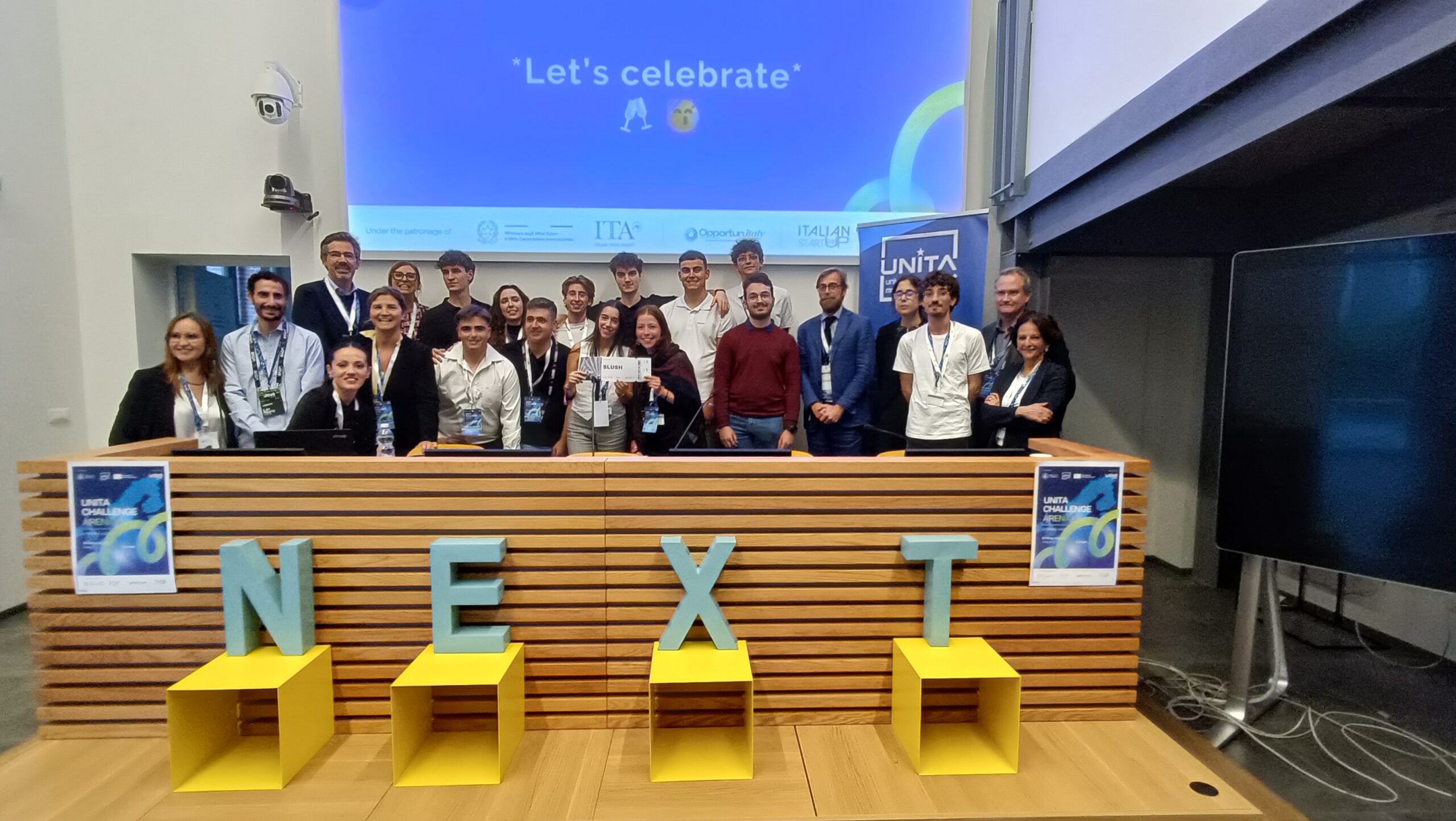
The experience concluded at the “Campus Luigi Einaudi” with a final event open to the public, during which the teams presented their pitches to a jury of experts from the academic and corporate worlds. The three most deserving projects awarded for originality, feasibility and innovative potential were:

  1. NomadicWay: An all-in-one platform designed for digital nomads, offering legal support, temporary housing, personalized services and an exclusive community. The goal is to simplify the lives of those who work remotely, creating social, environmental and economic impact.
  2. Cervisight: AI solution for early detection of cervical cancer, designed to reduce mortality rates in the most affected countries. Targets hospitals, government agencies and research institutions with a scalable, high social impact model.
  3. Loge Two: The project proposes a platform to facilitate housing for seasonal workers by improving accommodation in tourist locations and involving employers, landlords and institutions.

The initiative – promoted by in the framework of the UNITA action “Inter-territorial Interfaces for Innovation” – represented a unique opportunity to foster collaboration among European universitiespromote entrepreneurial spirit among young people, and strengthen the link between research, teaching, and the world of work.
Share the Post:

UNITA’s Inclusive societies Hub is one of the six hubs. Each hub is led by a ‘Task Force’, constituted by researchers representing the member universities.

This task force is animated and coordinated by two universities, Prof. Monica SZELES (UNITBV) , Prof. Patricia ALMAGUER (UNIZAR) and  Prof. Concepción LOMBA (UNIZAR) are the contact points.

Discover here below the Matching events organized within the Inclusive societies hub: 

UNITA’s Global health Hub is one of the six hubs. Each hub is led by a ‘Task Force’, constituted by researchers representing the member universities.

This task force is animated and coordinated by two universities, Dr. Amalric ORTLIEB (HES-SO) and Dr. Donatella Placidi (UNIBS) are the contact points.

Visit the Global Health hub padlet

Matching events for Global Health Hub

UNITA’s Digital transitions Hub is one of the six hubs. Each hub is led by a ‘Task Force’, constituted by researchers representing the member universities.

This task force is animated and coordinated by two universities: Prof. Antonio LOPEZ (UPNA) and Prof. Alexandre Miguel Pereira FIGUEIREDO (IPG) are the contact points.

UNITA’s Cultural Heritage Hub is one of the three hubs, together with Circular Economy and Renewable Energies, each one of them corresponding to one of the three Axes in which research activities in UNITA universities have been divided.

Each hub is led by a ‘Task Force’, constituted by researchers representing the member universities.

This task force is animated and coordinated by two universities, Prof. Laurence Roussillon-Constanty (UPPA) and Prof. Giaime Alonge (UNITO) are the contact points.

Within the research cartography, more than 300+ Cultural Heritage projects can be found, grouped into the following themes and sub-themes:

· Study and preservation of tangible Cultural Heritage
· Intangible Cultural Heritage and identity narratives
· Enhancement and dissemination of cultural and natural heritage
· Innovation policies for the development of marginalised areas

UNITA’s Cultural Heritage Hub

UNITA’s Circular economy and environment hub is one of the six hubs, each one of them corresponding to one of the three Axes in which research activities in UNITA universities have been divided.

Each hub is led by a ‘Task Force’, constituted by researchers representing the member universities.

This task force is animated and coordinated by two universities, Prof. Stefania DIMA (UVT) and Prof. José Maria FRAILE (UNIZAR) are the contact points.

Within the research cartography, more than 200+ Circular Economy projects can be found, grouped into the following themes and sub-themes:

 Activities achieved so far:

  • PhD thesis in cotutelle
  • Microcredentials
  • Summer Schools
  • Research seminars and workshops

UNITA’s Green energies Hub is one of the six hubs, each one of them corresponding to one of the six axes in which research activities in UNITA universities have been divided.

Each hub is led by a ‘Task Force’, constituted by researchers representing the member universities.

This task force is animated and coordinated by two universities, Prof. Benoit STUTZ (USMB) and Prof. Antonio CARDOSO (UBI) are the contact points.

Within the research cartography, more than 120+ projects related to renewable energies can be found, grouped into the following themes and sub-themes:

Energy transformation & Integration – System – Energy carriers
Solar energy
Socio-economic & legal & education aspect
Bioenergy
Geothermal energy
Hydropower
Wind

Activities achieved so far:

  • PhD thesis in cotutelle
  • Microcredentials
  • Summer Schools
  • Research seminars and workshops