Co founded by the european union logo

UNITA Week Pamplona addresses key issues for the future of the alliance

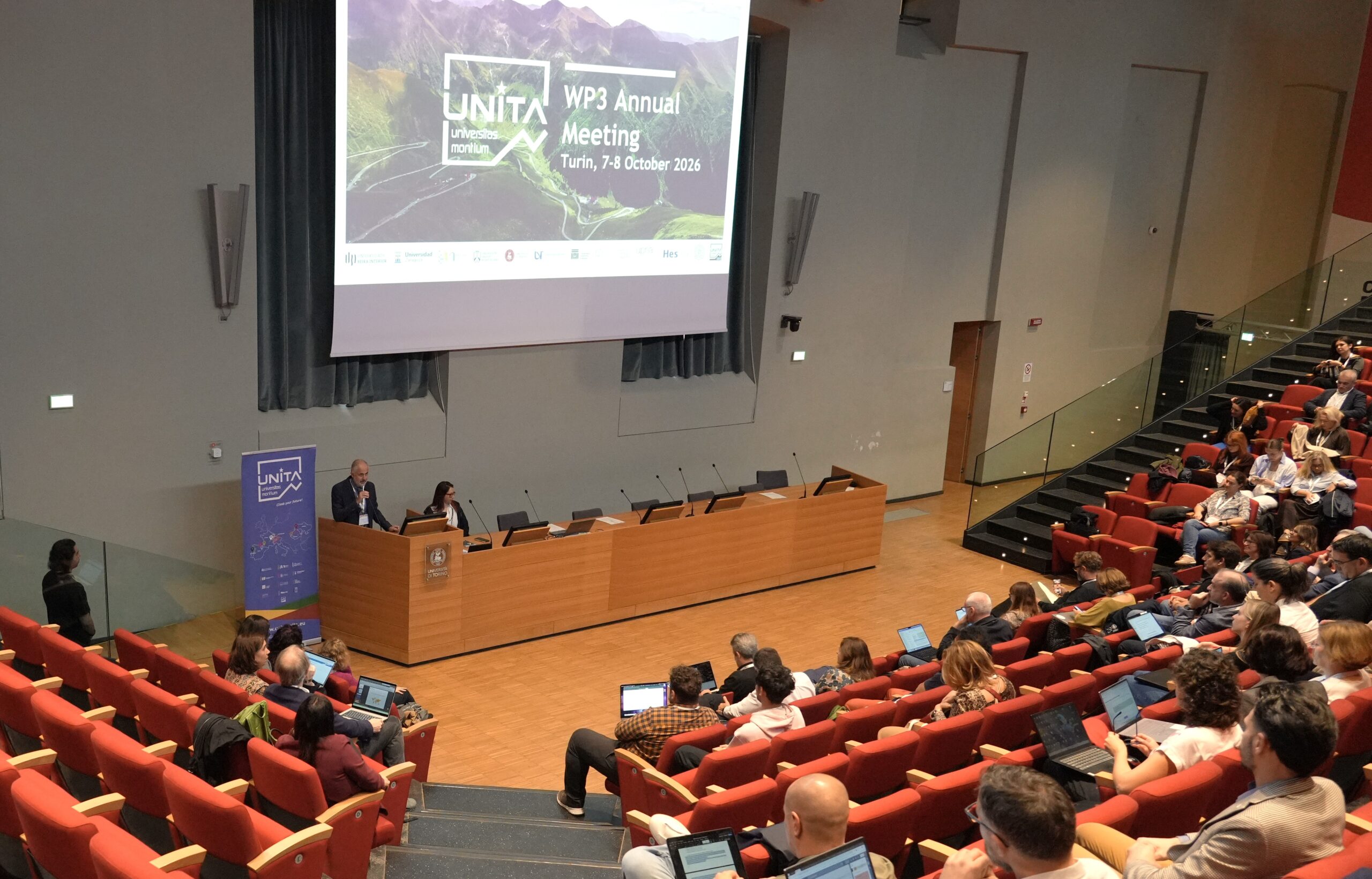
Between 25 and 28 February, Public University of Navarra (UPNA) hosted in Pamplona UNITA Week 2025, the Alliance’s most important annual meeting and work event. More than 150 people, representing all the universities that make up UNITA, met for three intense days of work to assess the state of progress of the project and to establish future strategies for the consolidation of the Alliance.

UNITA_week Pamplona

New organisational structure

In the framework of the meetings and activities scheduled at UNITA Week, key issues for UNITA were addressed, such as a roadmap towards a UNITA blueprint, conformed by its fundamental strategies, the preliminary results of the project´s quality review, the progress in the impact observatory, new refinements in the sustainable financial model and the identification of the needs for digitalisation of the different tasks.

Other key issues concerning the structure, organisation and consolidation of the alliance were also addressed. These included the approval of a new organisational structure more aligned with the governance of universities, as well as the signing of the so-called Brescia Declaration, drawn up in October 2024 in Brescia, which is committed to an ambitious institutional model capable of carrying out, on a European scale, all the activities of a university. The UNITA Week also served as the setting for the change in the Presidency of the Alliance, a position now held by Ramón Gonzalo, Rector of UPNA, replacing Marilen Gabriel Pirtea, Rector of Universitatea de Vest in Timisoara.

The Pamplona meeting also set up a specific programme of meetings for the students who are part of the UNITA Student Assembly. These parallel meetings were mainly aimed at finalising the details of the upcoming Student Assembly elections and the creation of an alumni network for former students.

Values, training and sustainability

Among the parallel activities, the organization of Noche UNITA stood out, an outreach event in which talks by five researchers from UNITA universities were interspersed with songs performed by a children’s choir in five languages of the alliance. The goal: to remember and highlight the values that define and unite the university communities that are part of UNITA.

The programme also included a lecture on European joint degrees by Dorothy Kelly, coordinator of the ARQUS Alliance of universities and professor at the University of Granada, and a training session on Agile methodology for project management.

It is also noteworthy that the organisation of this meeting by the UPNA was carried out in accordance with one of UNITA’s fundamental values: sustainability. In this sense, criteria were followed to reduce the consumption of paper and plastic as much as possible, replacing it with other more ecological alternatives. The aim was to reduce as much as possible the ecological footprint of an event that brings together such a large number of people. 

UNITA_week Pamplona complete
Share the Post:

UNITA’s Inclusive societies Hub is one of the six hubs. Each hub is led by a ‘Task Force’, constituted by researchers representing the member universities.

This task force is animated and coordinated by two universities, Prof. Monica SZELES (UNITBV) , Prof. Patricia ALMAGUER (UNIZAR) and  Prof. Concepción LOMBA (UNIZAR) are the contact points.

Discover here below the Matching events organized within the Inclusive societies hub: 

UNITA’s Global health Hub is one of the six hubs. Each hub is led by a ‘Task Force’, constituted by researchers representing the member universities.

This task force is animated and coordinated by two universities, Dr. Amalric ORTLIEB (HES-SO) and Dr. Donatella Placidi (UNIBS) are the contact points.

Visit the Global Health hub padlet

Matching events for Global Health Hub

UNITA’s Digital transitions Hub is one of the six hubs. Each hub is led by a ‘Task Force’, constituted by researchers representing the member universities.

This task force is animated and coordinated by two universities: Prof. Antonio LOPEZ (UPNA) and Prof. Alexandre Miguel Pereira FIGUEIREDO (IPG) are the contact points.

UNITA’s Cultural Heritage Hub is one of the three hubs, together with Circular Economy and Renewable Energies, each one of them corresponding to one of the three Axes in which research activities in UNITA universities have been divided.

Each hub is led by a ‘Task Force’, constituted by researchers representing the member universities.

This task force is animated and coordinated by two universities, Prof. Laurence Roussillon-Constanty (UPPA) and Prof. Giaime Alonge (UNITO) are the contact points.

Within the research cartography, more than 300+ Cultural Heritage projects can be found, grouped into the following themes and sub-themes:

· Study and preservation of tangible Cultural Heritage
· Intangible Cultural Heritage and identity narratives
· Enhancement and dissemination of cultural and natural heritage
· Innovation policies for the development of marginalised areas

UNITA’s Cultural Heritage Hub

UNITA’s Circular economy and environment hub is one of the six hubs, each one of them corresponding to one of the three Axes in which research activities in UNITA universities have been divided.

Each hub is led by a ‘Task Force’, constituted by researchers representing the member universities.

This task force is animated and coordinated by two universities, Prof. Stefania DIMA (UVT) and Prof. José Maria FRAILE (UNIZAR) are the contact points.

Within the research cartography, more than 200+ Circular Economy projects can be found, grouped into the following themes and sub-themes:

 Activities achieved so far:

  • PhD thesis in cotutelle
  • Microcredentials
  • Summer Schools
  • Research seminars and workshops

UNITA’s Green energies Hub is one of the six hubs, each one of them corresponding to one of the six axes in which research activities in UNITA universities have been divided.

Each hub is led by a ‘Task Force’, constituted by researchers representing the member universities.

This task force is animated and coordinated by two universities, Prof. Benoit STUTZ (USMB) and Prof. Antonio CARDOSO (UBI) are the contact points.

Within the research cartography, more than 120+ projects related to renewable energies can be found, grouped into the following themes and sub-themes:

Energy transformation & Integration – System – Energy carriers
Solar energy
Socio-economic & legal & education aspect
Bioenergy
Geothermal energy
Hydropower
Wind

Activities achieved so far:

  • PhD thesis in cotutelle
  • Microcredentials
  • Summer Schools
  • Research seminars and workshops